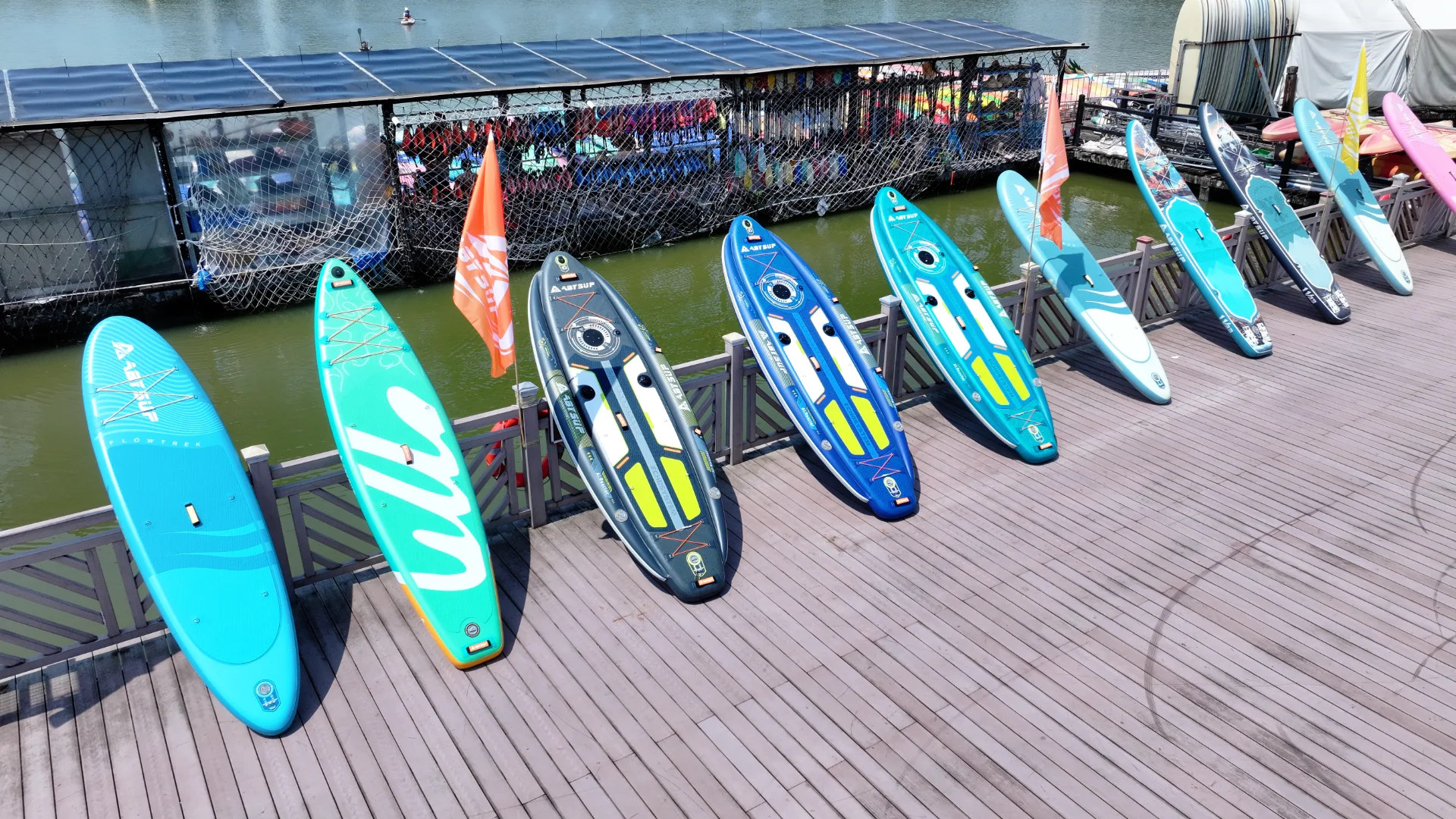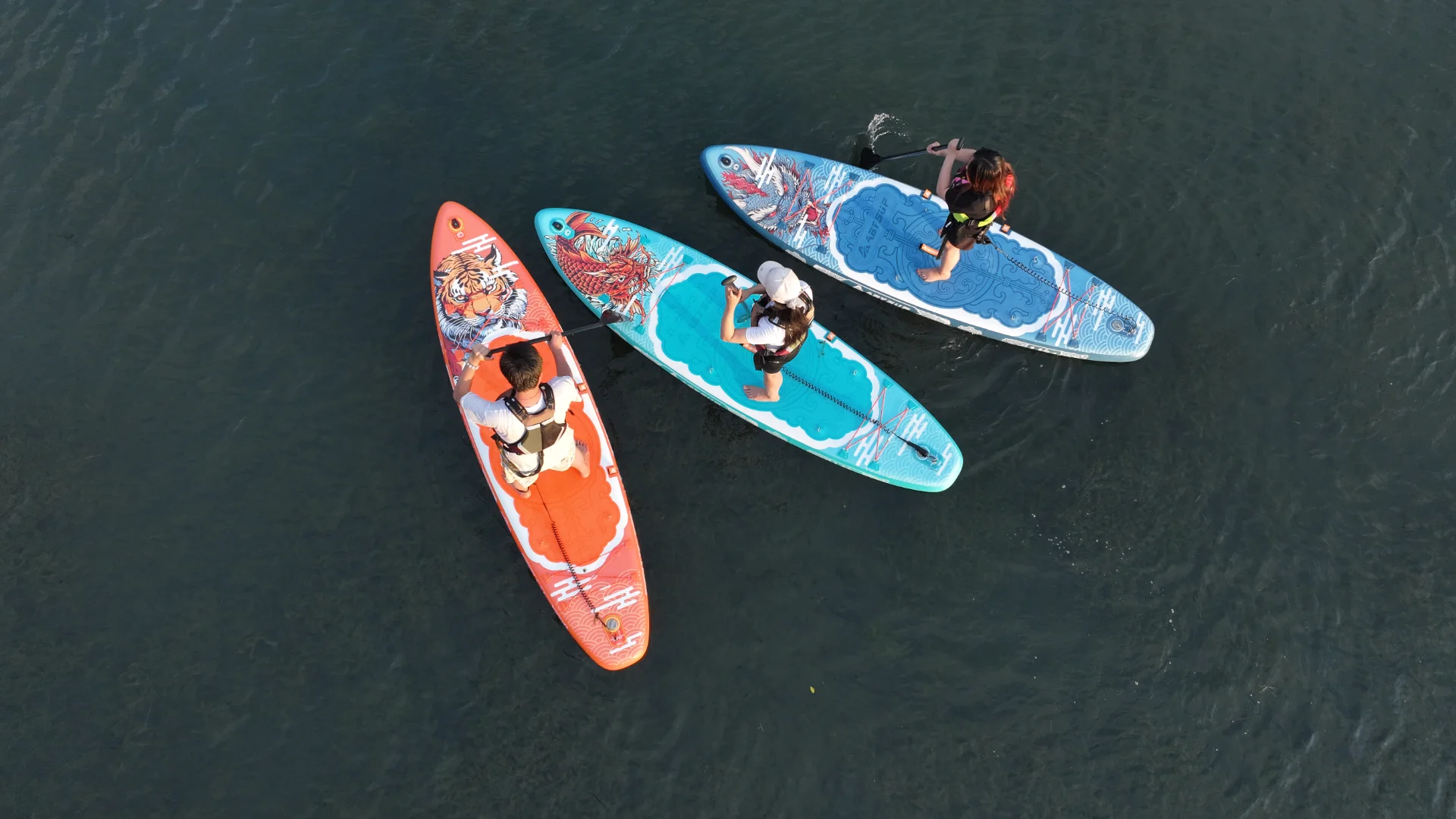
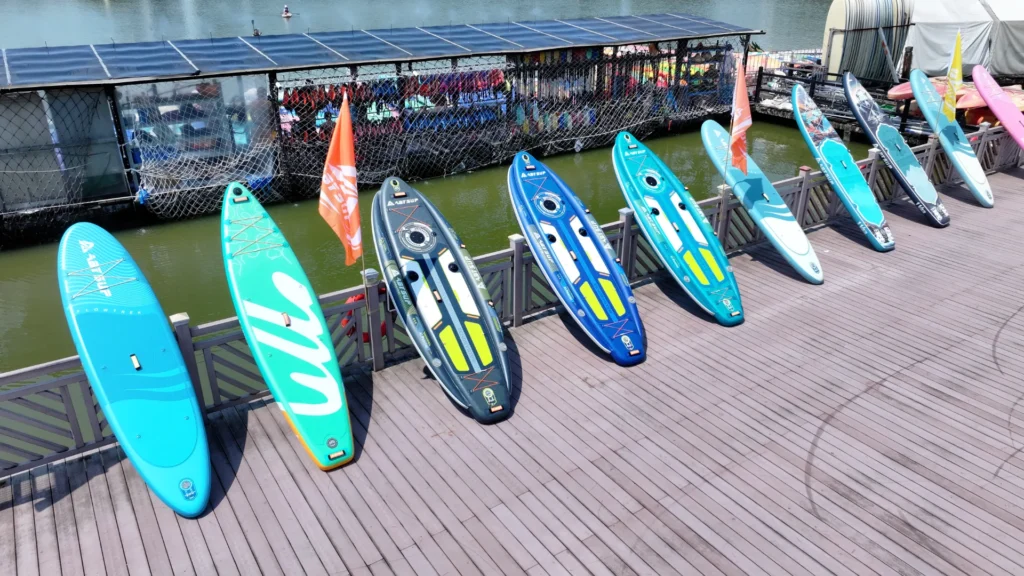
The boards were lined up, the water was calm, and several people were still deciding whether they were actually going to get on one.
I’m Allen, Senior Industrial Designer at ABYSUP, and I’ve spent nearly a decade designing inflatable paddle boards. Our second ABYSUP experience day at Guangzhou Baiyun Lake gave our design team something far more useful than polished product photography: a live view of how different people approach a board, balance for the first time, react to movement, and begin trusting the water.
This was not a race and it was not a technical clinic. It was a community paddle day built around a simpler question: what helps an uncertain first-time paddler feel ready to join in?
This Was a Community Day, Not a Product Shoot
A product shoot asks whether a board looks good from the shore. A community day asks whether somebody who has never paddled before feels comfortable stepping onto it.
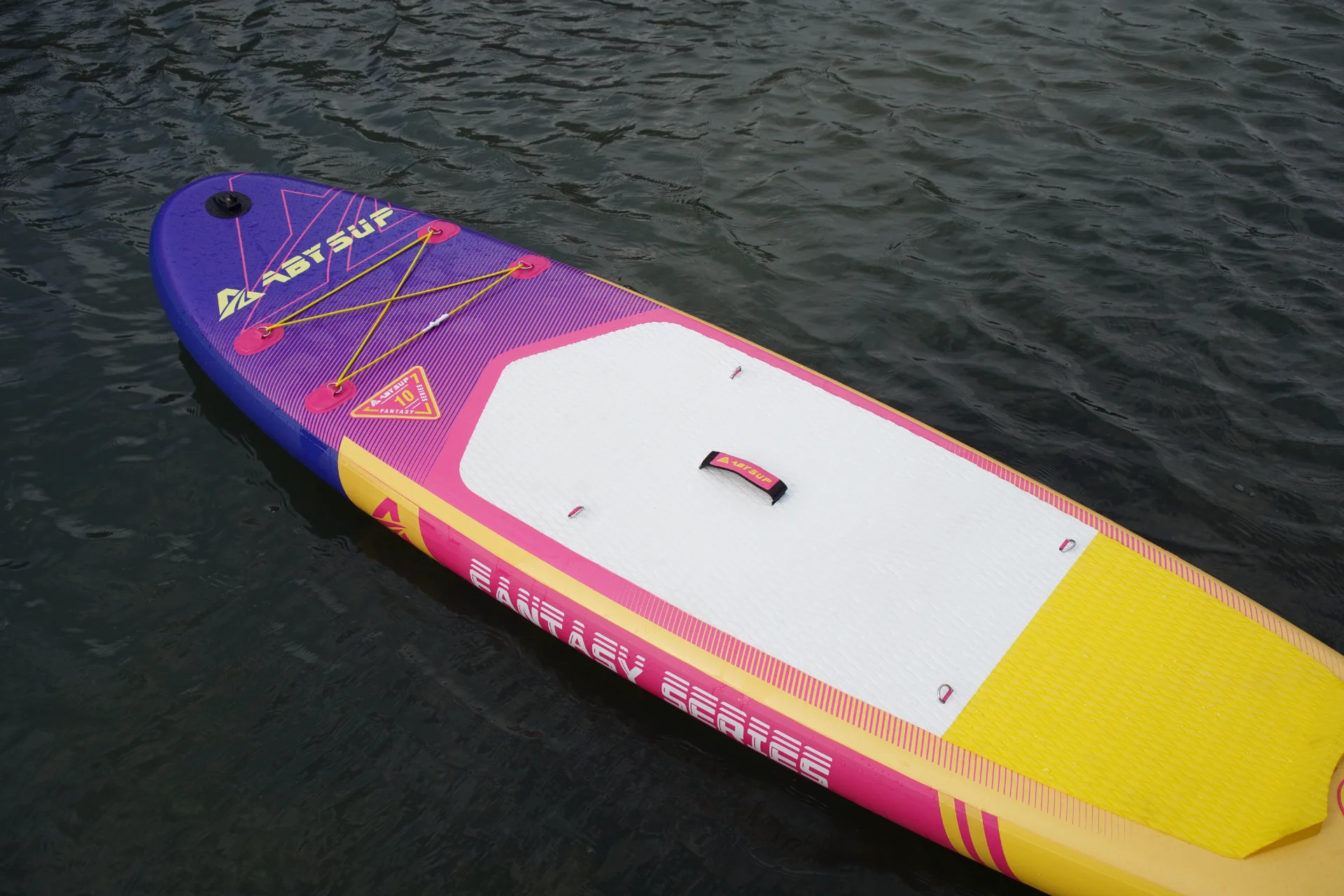
We brought a mixed fleet rather than a row of identical boards. Participants could see different outlines, widths, deck layouts and graphic styles before they entered the water. That choice mattered because people rarely select equipment from specifications alone. They first respond to scale, colour, perceived stability and whether a board appears manageable.
The first design lesson appeared before anyone launched: people naturally walked toward boards that looked wide enough to forgive mistakes, but not so large that they felt difficult to control.
“Standing beside the board line, I watched people make their first choice without reading a single specification. They looked at width, deck space and colour, then asked whether the board would feel stable. That instinct tells a designer more than a survey form ever could.” — Allen Xiao, équipe de conception ABYSUP
The event also reminded us that visual variety has practical value. A community fleet should not force every body type, skill level and activity onto the same generic shape. It should give people a clear starting point and room to progress.
What the Mixed Fleet Taught Us About Paddle Board Stability
For a new paddler, stability is not an abstract specification. It is the difference between looking ahead and spending the whole session staring nervously at their feet.
Board width changes that experience immediately. In calm flat water, the following ranges create noticeably different first-session behaviour:
| Largeur de planche | Sensation typique | Meilleur ajustement | Honest Trade-Off |
|---|---|---|---|
| 30–31 pouces | Quicker and more responsive | Experienced paddlers and distance use | Less forgiving during first-time weight shifts |
| 32–34 pouces | Balanced stability and control | Beginners, families and mixed community events | Slightly slower than a narrow touring shape |
| 35 pouces et plus | Very planted underfoot | Yoga, fishing, larger riders and passengers | More resistance and slower turning response |
At Baiyun Lake, the middle range gave the most useful balance for mixed groups. Wider specialist boards still had a role, particularly for seated participants and people carrying a passenger, but they were not automatically the right answer for everyone.
This is why we at ABYSUP organise our collection by use rather than pretending one board can perform every job equally well. Our all-round inflatable paddle boards are designed around that middle zone: enough stability to reduce first-session anxiety without turning the board into a slow floating platform.
More width buys confidence. It also costs speed. Good design is not hiding that trade-off; it is matching the trade-off to the rider.
Why the Supervised Tow-Line Drill Lowered the Fear Barrier
One of the most visually striking parts of the day was the supervised tow-line exercise. Participants sat or knelt on their boards while moving together at a controlled pace behind the support boat.
This was not designed to teach independent paddling technique. It was a confidence exercise. Sitting and kneeling lowered each rider’s centre of gravity, while the steady forward motion let them experience how the board tracked, how small wakes moved underneath it and how little correction was required on calm water.
- Low body position: reduced the consequence of sudden weight shifts.
- Shared movement: stopped nervous riders from feeling individually exposed.
- Predictable speed: let participants experience glide before managing their own paddle stroke.
- Visible supervision: kept the support boat and event team within immediate reach.
“The change in body language was obvious. At the start, several riders held the handles with both hands and kept their shoulders tight. After the first controlled loop, they were looking around, talking to the next board and letting the deck move beneath them.” — Allen Xiao, équipe de conception ABYSUP
The important limitation: this was a supervised event drill in controlled flat water, not an activity for paddlers to copy behind a private motorboat. Independent paddlers should use a suitable buoyancy aid, the correct leash for their environment and a waterproof means of communication, as outlined in the RNLI paddleboarding safety guidance.
The Best Community Design Removes Embarrassment
Most people do not avoid a first paddle because the sport looks physically impossible. They avoid it because they are worried about looking awkward in front of everyone else.
That changes how we design an event. Long technical speeches make nervous participants feel tested. Short visual demonstrations, seated starting positions and group exercises make them feel included before anyone asks them to perform.
The International Surfing Association describes stand-up paddling as a discipline that can take place across oceans, rivers, lakes and flat water, with room for recreational participants as well as competitive athletes. That range is part of what makes stand-up paddling broadly accessible.
But accessibility does not happen automatically. Equipment, instruction and atmosphere still decide whether somebody feels that the activity is meant for them.
In our earlier article about building a paddleboarding community where people feel welcome, I argued that community starts when a person can try the product without feeling foolish. Baiyun Lake gave us a second chance to see that idea working in practice.
Our design philosophy is simple: the first ten minutes matter more than the first ten kilometres. If the board, setup and event format help someone relax during those ten minutes, skill development can follow naturally.
Who This Kind of Paddle Board Event Is For — and Who It Is Not For
This format is a strong fit for:
- Adults trying an inflatable paddle board for the first time.
- Families who want a shared outdoor activity without race pressure.
- Paddlers who are comfortable near water but uncertain about standing balance.
- Retailers and dealers who want customers to test several board types before buying.
- Community groups, clubs and rental operators introducing SUP on protected flat water.
This format is not designed for:
- Advanced race training or high-speed technique work.
- Open-water touring in wind, swell or strong current.
- Surf instruction or river environments with entrapment hazards.
- People expecting a detailed one-to-one coaching certification session.
- Participants who are unwilling to wear the required safety equipment.
A community event should be honest about its purpose. Ours was designed to reduce the barrier to participation and let people experience several boards in a controlled setting. It was not meant to prove that every participant could master standing technique in one afternoon.
For paddlers selecting a board after their first experience, our guide des tailles de planches à pagaie explains how rider weight, height, width and activity should shape the final choice.
What We Will Carry Into the Next ABYSUP Community Event
A good event recap should not end with a gallery. It should change what happens next.
Our design and brand teams left Baiyun Lake with several practical decisions:
- Make board selection more visual. Width, rider range and use case should be readable before a participant reaches the water.
- Keep a mixed demo fleet. One repeated shape cannot show the real difference between all-round, touring and high-stability boards.
- Start nervous riders low. Seated and kneeling exercises build movement confidence before standing instruction begins.
- Use shorter activity loops. A short positive first session creates more willingness to return than a long session that ends in fatigue.
- Give dealers an event-ready media kit. Clear setup guidance, safety checklists, board-selection signage and lifestyle imagery make local demo days easier to run.
The photographs also showed us something useful about colour design. On open water, strong contrast between the deck, rails and surrounding water makes boards easier to track from shore and from the support boat. That is not only a visual decision; it affects group supervision and event organisation.
We will keep refining the format. Not to make the next event look larger, but to make each participant’s first interaction feel calmer, clearer and more personal.
Frequently Asked Questions About ABYSUP Community Paddle Events
Is a paddle board community event suitable for complete beginners?
Yes, provided the event takes place in protected water with suitable supervision and beginner-friendly boards. New paddlers should be allowed to begin seated or kneeling rather than being pushed to stand immediately.
A well-run event reduces pressure and introduces one skill at a time. The goal of the first session is comfort and basic control, not speed or distance.
What paddle board width works best for a mixed beginner group?
For most adult beginners, boards around 32 à 34 pouces de largeur provide a useful balance between stability and manageable paddling response. Wider 35-inch platforms can help larger riders, yoga users or passengers, but they require more effort to move and turn.
Narrower 30–31-inch boards suit experienced or distance-focused paddlers better. They are not usually the first choice for a mixed community demo.
Is towing paddle boards behind a boat safe?
It should only be considered as a professionally controlled event exercise with low speed, calm water, suitable equipment and immediate supervision. It is not a general recreational activity for private paddlers to copy.
For normal independent paddling, participants should learn propulsion, stopping, turning and remounting without being towed.
What should participants bring to a first paddle board event?
Bring clothing that can get wet, sun protection, drinking water and a properly fitted buoyancy aid if the organiser does not provide one. A waterproof phone pouch and suitable leash should also be part of the safety setup.
Leave valuables on shore and expect to enter the water. Falling in is a normal part of learning, not a sign that the session went badly.
Can ABYSUP dealers organise local community demo days?
Yes. Community demo days can help customers compare board shapes, understand size differences and select equipment with more confidence. They are particularly useful for dealers serving first-time buyers, families and lifestyle paddlers.
The event should use a documented safety process, a clear board-to-rider matching system and enough staff to supervise the active water area.
Find the Right Way Into Paddleboarding
For individual paddlers, the right first board is the one that matches your body, your local water and how you genuinely plan to use it. Start with our all-round and activity-based collections, then use the size guide to narrow the choice.
For retailers, clubs and event partners, community experience days can turn specifications into something customers can feel under their feet. Visit the ABYSUP dealer programme to discuss demo fleets, local events, product ranges and trade support with our team.
The invitation is simple: choose a board that makes you want to return to the water, then bring somebody with you next time.