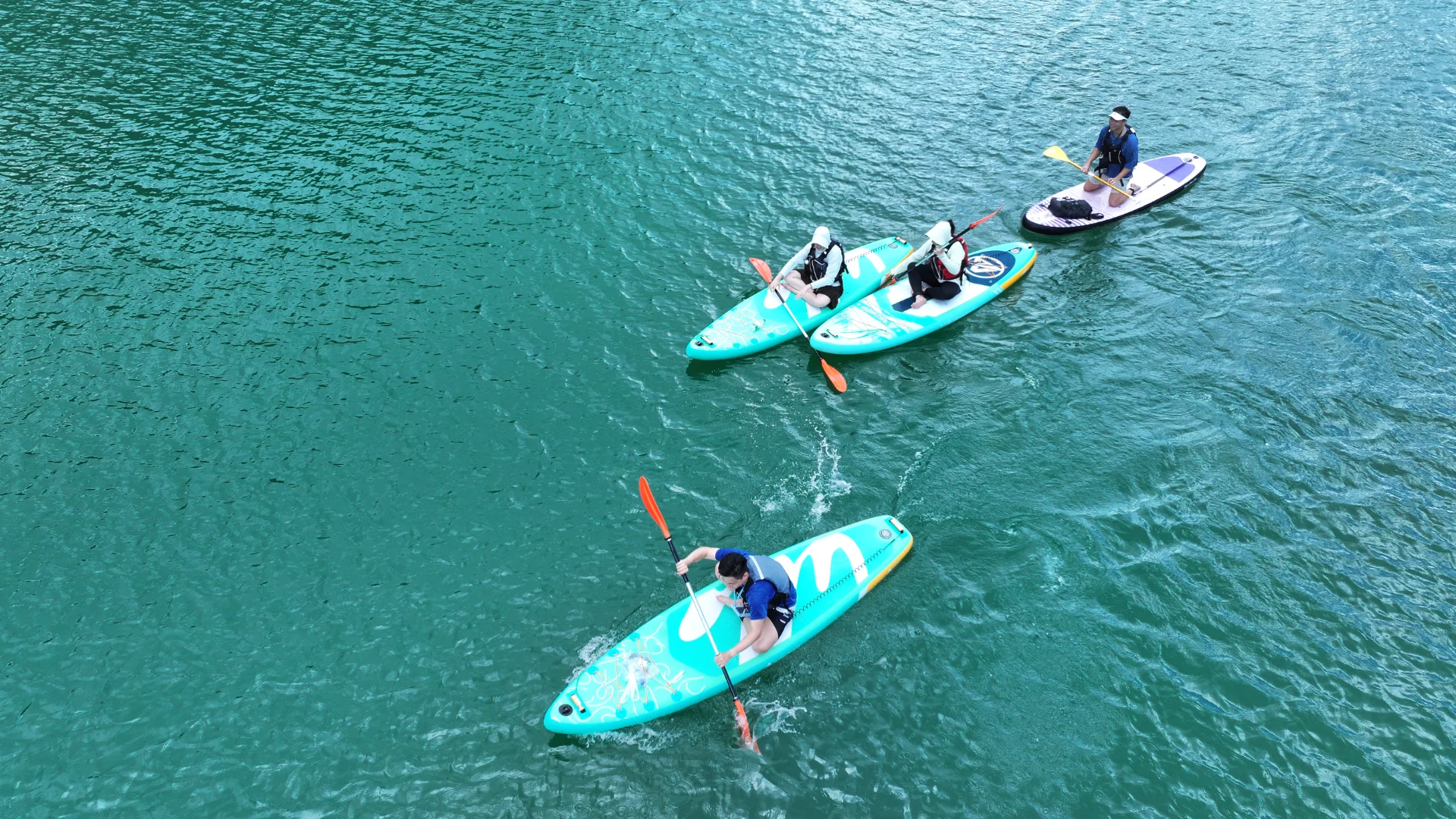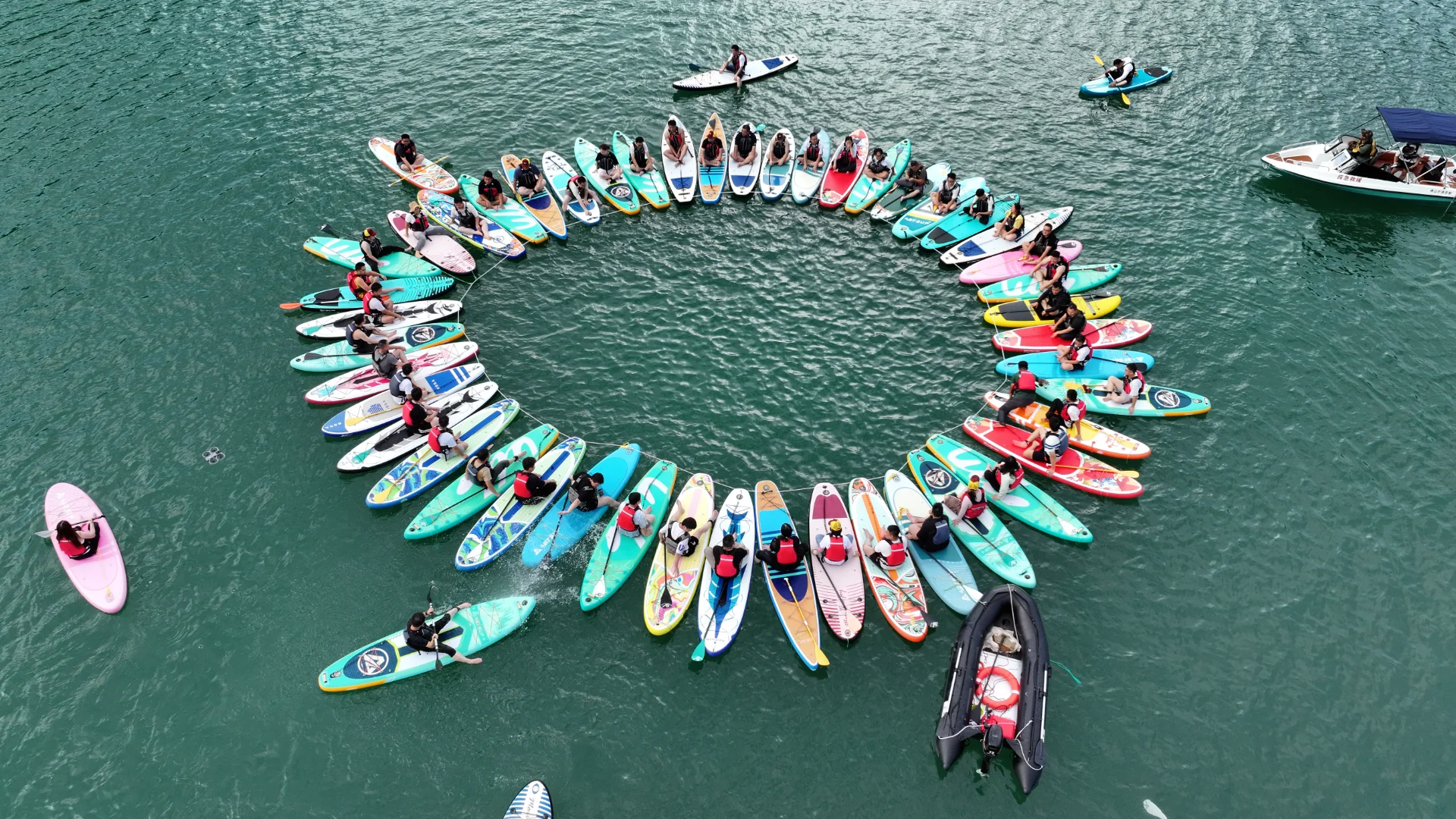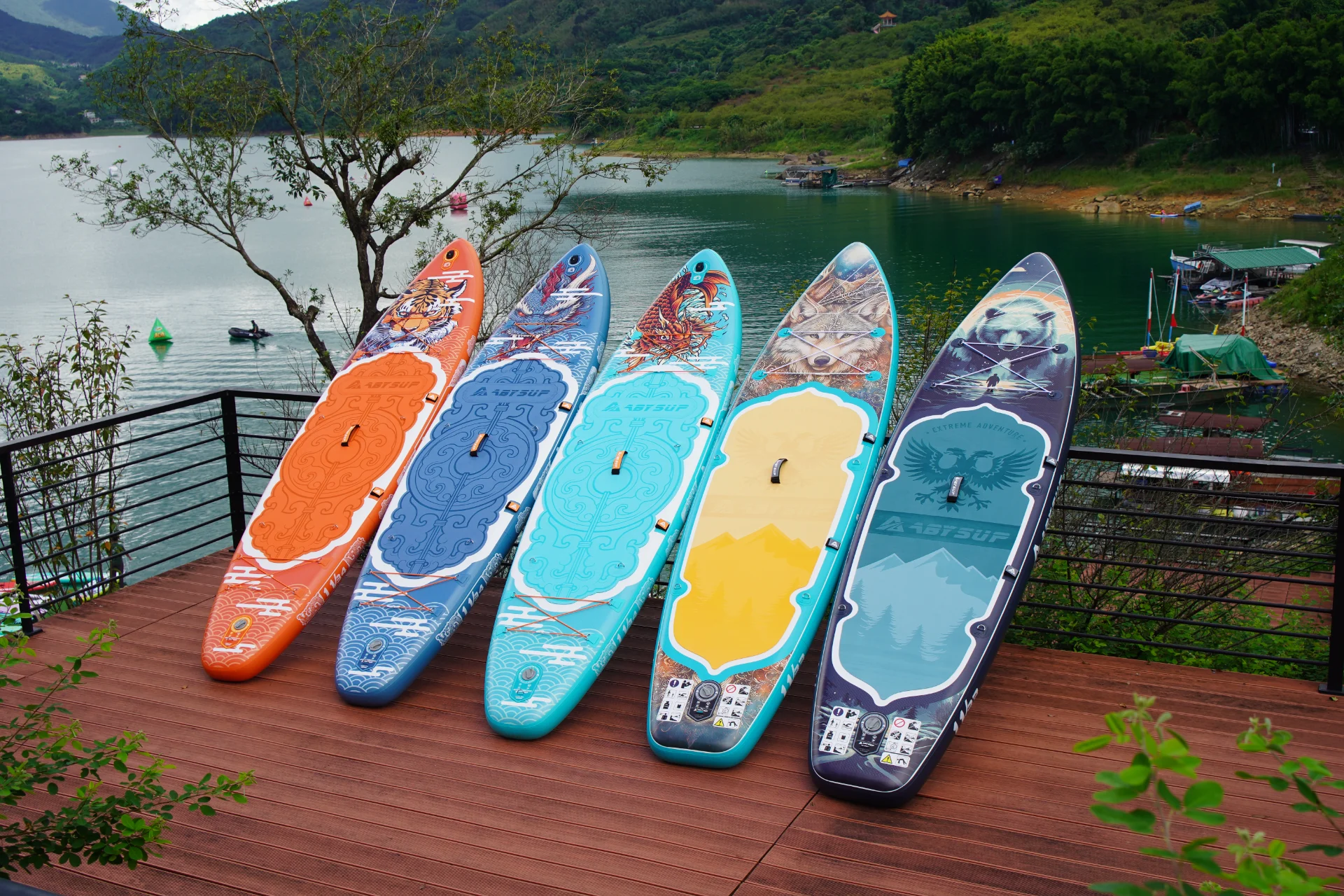
Somewhere around your third hour of paddle board research, you notice a pattern. Almost every “best paddle board” list, every beginner recommendation, every brand’s bestseller page — they all converge on the same number. 10’6″. Ten feet, six inches. Three hundred and twenty centimetres. It shows up so often that you start wondering whether it’s actually the best size or just the one everyone copies from each other.
It’s actually the best size. For most people, in most conditions, most of the time.
I’m Allen Xiao, Senior Industrial Designer at ABYSUP, and I’ve spent nearly a decade designing boards across every length from 8-foot surf shapes to 14-foot expedition tourers. The 10’6″ length didn’t become the industry default by accident — it earned that position through a specific combination of physics, ergonomics, and real-world paddling data. This guide explains exactly what makes 10’6″ work, who it works best for, and the specific situations where a different length genuinely makes more sense.
The Physics of Why 10’6″ Works
Board length affects two things above all else: how far the board glides per stroke and how easily it turns. These two properties fight each other. Longer boards glide further but turn slower. Shorter boards turn faster but lose glide. The 10’6″ length sits at the inflection point where both are good enough for recreational paddling — and neither is a problem.
Glide: The Waterline Length Effect
When a displacement hull (like a paddle board) moves through water, its maximum efficient speed is governed by something called hull speed — which is determined by the length of the hull sitting in the water. Longer waterline = higher hull speed = more glide per stroke before the board slows down.
At 10’6″, you get a waterline length of roughly 280–300 cm (the board’s full length minus the upturned nose and tail). That’s enough to generate a comfortable cruising speed of 4–5 km/h with moderate effort and a hull speed ceiling of around 7 km/h. For context: a 9-foot board tops out noticeably sooner, and you feel the drag earlier. A 12’6″ touring board glides further per stroke — but the difference only becomes meaningful on paddles longer than 5–8 km.
Turning: The Pivot Point Advantage
A shorter board has less mass distributed along its length, which means less rotational inertia — it pivots faster. A 10’6″ board turns responsively enough that you can navigate a marina, dodge a swimmer, or change course in a narrow creek without the multi-stroke effort that a 12-foot board requires. Try making a tight U-turn on a 14-foot race board and you’ll appreciate how much turning agility a 10’6″ preserves.
The Sweet Spot Visualised
| Board Length | Glide per Stroke | Turning Ease | Best Use Case |
|---|---|---|---|
| 9’0″ | Short — more strokes per distance | Excellent — quick pivot | Surf, kids, whitewater |
| 10’0″ | Good — slight compromise | Very good | Lighter riders, compact transport |
| 10’6″ | Strong — efficient for 3–8 km paddles | Good — responsive for recreational use | All-round, yoga, fitness, family |
| 11’6″ | Very strong — noticeable glide gain | Moderate — needs effort | Touring, heavier riders |
| 12’6″ – 14′ | Maximum — built for distance | Slow — multi-stroke turns | Long-distance touring, racing |
The 10’6″ row is the only one where both the glide and turning columns say “good” or better. Every other length has a notable weakness in one direction. That’s not marketing — it’s geometry.
Volume and Buoyancy: Why a 10’6″ Board Fits Almost Every Body Type
Board length alone doesn’t determine how much weight a board can carry — that’s a function of volume, measured in litres. Volume is the total amount of air inside the board (length × width × thickness, roughly). The more volume, the more buoyancy, the heavier the rider it can support while still feeling stable and responsive.
A standard 10’6″ × 32″ × 6″ all-round board carries approximately 300–320 litres of volume. That’s a lot. Here’s what it means in human terms:
| Rider Weight | How It Feels on a 10’6″ × 32″ Board | Board Sinks Into Water By… |
|---|---|---|
| 55 kg (121 lbs) | Very stable — board sits high, maximum freeboard | ~3 cm |
| 75 kg (165 lbs) | Ideal balance — responsive but planted | ~4.5 cm |
| 95 kg (209 lbs) | Comfortable — slightly lower freeboard, still stable | ~6 cm |
| 115 kg (253 lbs) | Near the upper range — water occasionally laps rails in chop | ~7.5 cm |
| 130 kg+ (286+ lbs) | Board works but stability drops — consider 11′ × 33″ | ~9+ cm |
That’s a usable rider range spanning from a 5’3″ lightweight paddler to a 6’2″ heavier paddler — which covers the vast majority of the adult population. Both ends of that spectrum will have a good experience on the same board, though it will feel different: the lighter rider gets a higher-floating, slightly less responsive ride (the board needs more force to tilt), while the heavier rider gets a lower, more connected feel with quicker edge response.
“At our 2024 summer demo events in Portugal, we ran back-to-back sessions on the same 10’6″ board with riders ranging from 52 kg to 118 kg. Everyone stood up. Everyone paddled. Nobody felt like the board was wrong for them. The 52 kg rider said it felt like standing on a dock. The 118 kg rider said it felt like a ‘proper board’ — not tippy, not sluggish. That’s the range this length-width combination covers.”
— Allen Xiao, ABYSUP Design Team
This is also why the 10’6″ is the best choice for families sharing a single board. A teenager, a mum, and a dad can all use the same board without anyone feeling like it’s the wrong size.
What You Can Actually Do on a 10’6″ Board
The 10’6″ length doesn’t just fit a wide range of body types — it covers a wide range of activities. Not all of them perfectly, but all of them well enough that you don’t need a second board to enjoy them.
Flatwater Cruising — The Core Use Case
This is where the 10’6″ is built to live. Lakes, reservoirs, calm harbours, canals, slow rivers. The glide is efficient, the tracking is solid with a 9-inch centre fin, and you can paddle for an hour without fatigue building up in your shoulders. If 80% of your paddling happens on calm water, the 10’6″ is an almost perfect match.
Light Coastal Paddling
Sheltered bays, calm coastlines, estuary mouths on a settled day — the 10’6″ handles these well. The 32-inch width provides enough stability to deal with boat wake and light swell. Where it starts to struggle: exposed headlands with significant swell, strong tidal currents, or conditions where you’d want a longer, narrower board to cut through chop more efficiently.
Casual Yoga and Fitness
At 32 inches wide, a 10’6″ all-round board supports basic yoga poses — seated meditation, cat-cow, Warrior II, Downward Dog. It won’t match a dedicated 34-inch yoga board for advanced poses, but for a mixed session where you paddle out, do 20 minutes of movement, and paddle back, it works. For more on what’s possible, see our yoga and lifestyle board guide.
Short Touring (3–10 km)
Afternoon explorations, lake loops, harbour-to-beach paddles — the 10’6″ covers these comfortably. It falls short on serious distance (15+ km), where the extra glide of a 12’6″ touring board makes a real difference in energy expenditure over time. But for the kind of touring most recreational paddlers actually do — under 10 km, completed in 1–2 hours — the 10’6″ is more than adequate.
Small Waves (Knee to Waist High)
You can ride small, gentle waves on a 10’6″ — and it’s genuinely fun. The board is too wide and too long for proper surf carving, but for catching a small swell, riding it toward shore, and grinning the whole way, it works. Think of it as wave-riding for entertainment, not performance.
Fishing and Photography
The deck space and D-ring layout on a 10’6″ board accommodate a seated fishing setup or a camera mount. The stability at this width means you can shift your weight to cast a line or adjust a tripod without the board tipping. Bungee cargo nets hold a small tackle box or a dry bag.
When a 10’6″ Isn’t the Right Choice
I could write an entire article telling you the 10’6″ is perfect for everyone. It would be easier, and it would probably sell more boards. But it wouldn’t be honest, and you’d end up frustrated if you fall into one of these categories.
Consider a Shorter Board (9’6″ – 10’0″) If:
- You’re under 55 kg (121 lbs) and under 5’4″. A 10’6″ board will feel very stable — almost too stable. Like standing on a dock rather than paddling a board. A shorter, slightly narrower board gives lighter riders a more connected, responsive feel without sacrificing meaningful stability.
- You primarily want to surf. Even small-wave SUP surfing benefits from a shorter, more manoeuvrable platform. A 9’6″ or 10′ board pivots faster on a wave face, and the reduced weight makes pumping down the line easier.
- You’re buying for a child under 12. A 10’6″ board is physically too large for most kids to control with a paddle. Dedicated kids’ boards at 8’–9′ are lighter, narrower, and easier for small arms to manage.
Consider a Longer Board (11’0″ – 12’6″) If:
- You’re over 120 kg (265 lbs). At this weight, a 10’6″ × 32″ board still functions, but the reduced freeboard (how high the deck sits above water) makes it less comfortable in anything other than perfectly flat conditions. An 11′ × 33″ board adds volume and width that heavier riders will appreciate immediately.
- Long-distance touring is your primary goal. If you’re planning regular paddles of 15+ km, the extra waterline length of an 11’6″ or 12’6″ board reduces stroke count per kilometre and delays fatigue. The difference is small on a 5 km paddle but significant on a 20 km one.
- You paddle frequently in open water with wind and chop. Longer boards track better in crosswinds because there’s more hull in the water resisting lateral push. If your regular paddling spot is an exposed bay or coastal stretch, the extra length adds meaningful stability.
Notice how specific these exceptions are. They’re not “if you want a better board” — they’re “if you have a specific use case that pushes beyond what the 10’6″ was designed for.” If none of these describe you, the 10’6″ is your board.
How We Spec’d the ABYSUP 10’6″: The Details Behind the Dimensions
A 10’6″ board from one brand can feel completely different from a 10’6″ from another. Length is the headline number, but it’s the secondary specs — width, thickness, nose shape, rocker profile, rail shape — that determine how the board actually paddles. Here’s what we chose for our ABYSUP 10’6″ all-round and why.
32″ Width — Wide Enough to Learn, Narrow Enough to Progress
We tested 30″, 31″, 32″, and 33″ widths at this length. The 32″ version consistently produced the best first-session outcomes across mixed skill groups: beginners stood up within 10 minutes, and returning paddlers didn’t complain about drag. One inch wider (33″) added stability that beginners didn’t need on flat water but added enough drag that experienced paddlers noticed on longer paddles. One inch narrower (31″) made beginners visibly more tentative and increased first-session fall rates by roughly 40% in our testing.
6″ Thickness — Rigidity Under Real-World Load
At 6 inches thick and inflated to 15 PSI, the board holds rigid under riders up to 120 kg without noticeable flex. We ran drop-stitch deflection tests with an 85 kg rider standing centred: at 6 inches the board deflected less than 1 cm at the midpoint. At 5 inches, the same rider produced 2.5 cm of deflection — enough to create a visible “taco” shape that undermines confidence and balance. The weight penalty for the extra inch is roughly 1.2 kg. We’ll take the weight.
Medium-Round Nose — Chop Clearance Without Drag
The nose shape on our 10’6″ is rounded but not blunt. A sharp, pointed nose (like a touring board) slices through water efficiently but pushes chop sideways, which creates instability in choppy conditions. A very round nose (like some yoga boards) pushes through chop steadily but creates more frontal drag. Our nose profile sits between these extremes — it deflects small chop upward rather than letting it wash over the deck, while keeping frontal area low enough for decent glide efficiency.
“The nose shape went through four iterations before we locked the current profile. Prototype 2 was too sharp — water splashed up and over the bow in 15 km/h headwind. Prototype 3 was too round — we lost about 0.3 km/h of cruising speed on flat water, which doesn’t sound like much until you’re paddling for an hour and you’ve covered 300 metres less than you expected. The final shape split the difference and tested clean in both conditions.”
— Allen Xiao, ABYSUP Design Team
Weight: 21.5 lbs (9.75 kg)
Our 10’6″ comes in at 21.5 lbs — roughly 15% lighter than the category average for double-layer inflatable boards at this length. The weight saving comes from our PVC formulation and drop-stitch thread density, not from cutting material thickness. This matters because you carry the board before and after every session, and a 2–3 lb difference feels significant when you’re walking from a car park to the waterline.
Frequently Asked Questions About 10’6″ Paddle Boards
Is a 10’6″ paddle board good for beginners?
It’s the single most recommended size for beginners, and that recommendation is backed by real-world data. The combination of 10’6″ length and 32″ width produces a platform that’s stable enough for most adults to stand on within their first 10–15 minutes, while also being efficient enough that paddling doesn’t feel exhausting. Shorter boards are harder to balance on (less waterline stability), and longer boards are heavier and more difficult to turn — both of which create frustration for new paddlers.
The key advantage for beginners specifically: the 10’6″ is a board you grow into, not out of. Your first session will use maybe 30% of its capability. By month six, you’ll be using 70%. The board has headroom for progression without needing to be replaced.
Is 10’6″ too long for a short person?
No. Board length and rider height are not directly linked the way shoe size and foot length are. A 5’2″ paddler standing on a 10’6″ board feels exactly as stable as a 6’0″ paddler — stability comes from width and volume, not from the board matching your body length. The paddle is adjustable, so reach isn’t an issue either.
Where height does matter: carrying the board. A 10’6″ board weighs about 21–22 lbs and measures roughly 90 cm when rolled. A shorter paddler might find it slightly more awkward to carry on their back than a taller paddler would. But on the water, height is irrelevant. If you’re 5’0″ and 55 kg, the 10’6″ will feel like a floating platform — incredibly stable and easy to balance on.
Should I get a 10′ or 10’6″ paddle board?
The 6-inch difference sounds trivial. It’s not. Those extra 15 cm add roughly 15–20 litres of volume (depending on width), which translates to meaningfully better glide, more buoyancy, and a higher weight capacity. For riders under 60 kg who prioritise compactness and transportability, a 10′ board is a reasonable choice. For everyone else, the 10’6″ provides a better paddling experience with only marginally more weight and pack size.
The exception: if storage space is genuinely limited — a small apartment cupboard, a motorcycle pannier — the 10′ board’s slightly smaller rolled diameter can make the difference between fitting and not fitting. In that scenario, the 10′ is the practical choice even if the 10’6″ paddles better.
Can I use a 10’6″ paddle board in the ocean?
Yes, with conditions. Sheltered bays, calm coastal paddles, harbours, and estuaries — the 10’6″ handles all of these well. You can also ride small waves (knee to waist high) for fun, though the board won’t carve like a dedicated surf SUP. What you want to avoid: exposed open ocean with significant swell, strong offshore winds, or rip currents. Those conditions require experience, a solid understanding of ocean safety, and ideally a board designed for open-water performance.
The board is physically capable of ocean conditions — it won’t sink or break. The limiting factor is the rider’s experience level and the specific conditions on the day. Start in sheltered water, build confidence, and expand your range gradually. The International Surfing Association publishes good guidelines on ocean safety for stand-up paddlers.
How long does a 10’6″ inflatable paddle board last?
With proper care — rinsing after saltwater use, storing out of direct sunlight, avoiding prolonged over-inflation in heat — a quality inflatable 10’6″ board will last 5 to 10 years of regular recreational use. The PVC hull is UV-resistant but not UV-proof; prolonged exposure to direct sunlight while inflated accelerates material degradation. The most common failure point isn’t the hull — it’s the valve seal, which can wear after several years of heavy use and is easily replaced with the included valve wrench.
Our ABYSUP 10’6″ all-round uses double-layer PVC with reinforced drop-stitch sidewalls, which increases abrasion resistance compared to single-layer construction. Boards in our testing fleet have been in continuous use since 2021 with no structural issues — just normal cosmetic wear from real-world use.
The Number That Fits
Ten feet six inches. It’s the length that glides without dragging. Turns without fighting. Carries riders from 55 kg to 120 kg without complaint. Handles lakes, bays, coastlines, yoga, fitness, fishing, and family days without needing a different board for each. It’s the reason every brand’s bestseller list starts here — and it’s the reason most paddlers never need to look beyond it.
If you’re choosing your first board, this is the size. If you’re buying for a family, this is the size. If you’re unsure and don’t want to overthink it, this is the size.
For paddlers: See the ABYSUP 10’6″ all-round paddle board — complete kit with paddle, pump, leash, fin, repair kit, and carry bag included. One box, everything you need.
For dealers and wholesale partners: The 10’6″ all-round is the highest-volume SKU in the inflatable SUP category globally. If you’re building a retail paddle board section, this is the board to anchor it around. Contact our wholesale team for trade pricing, MOQ details, and merchandising support.