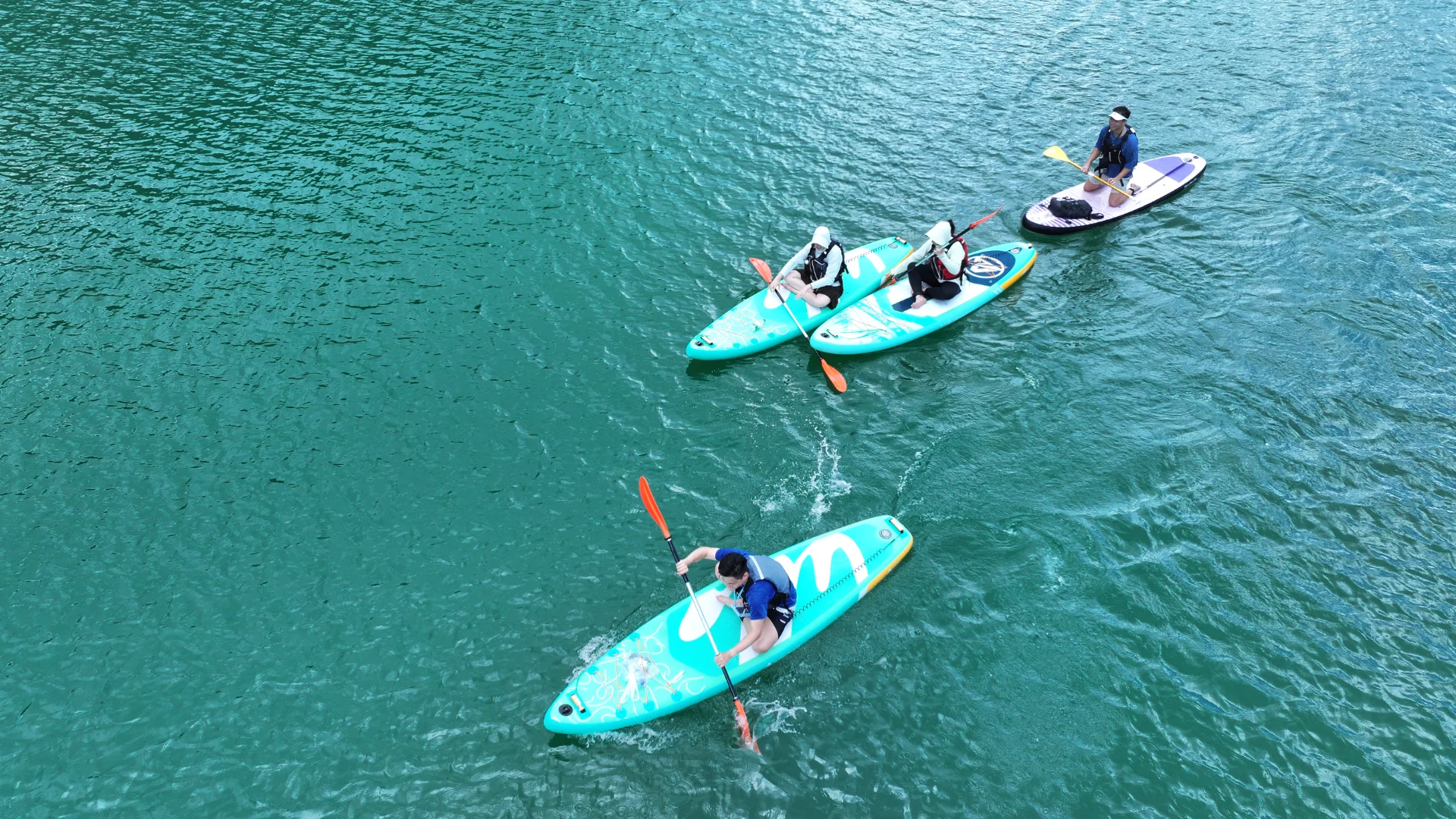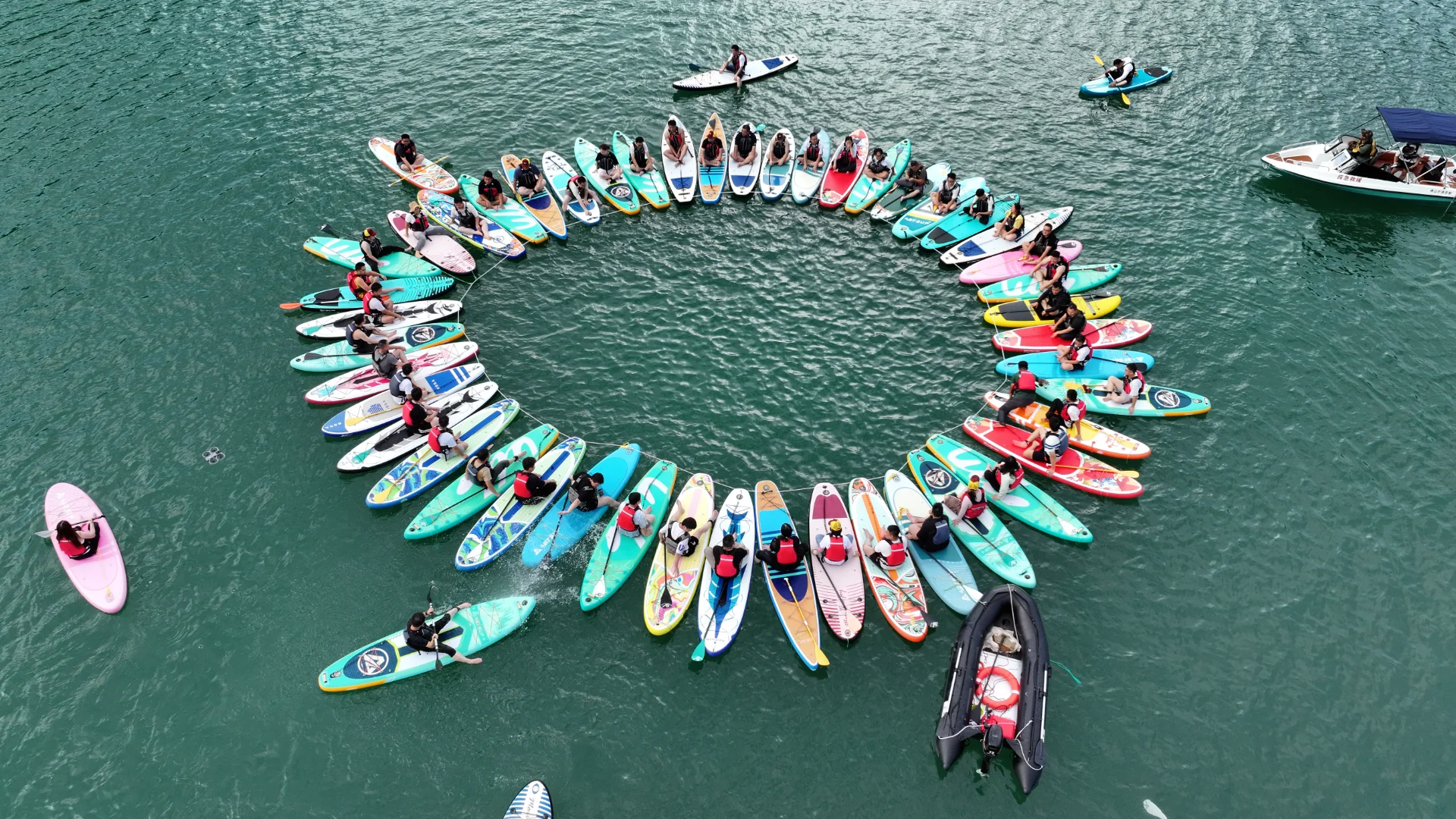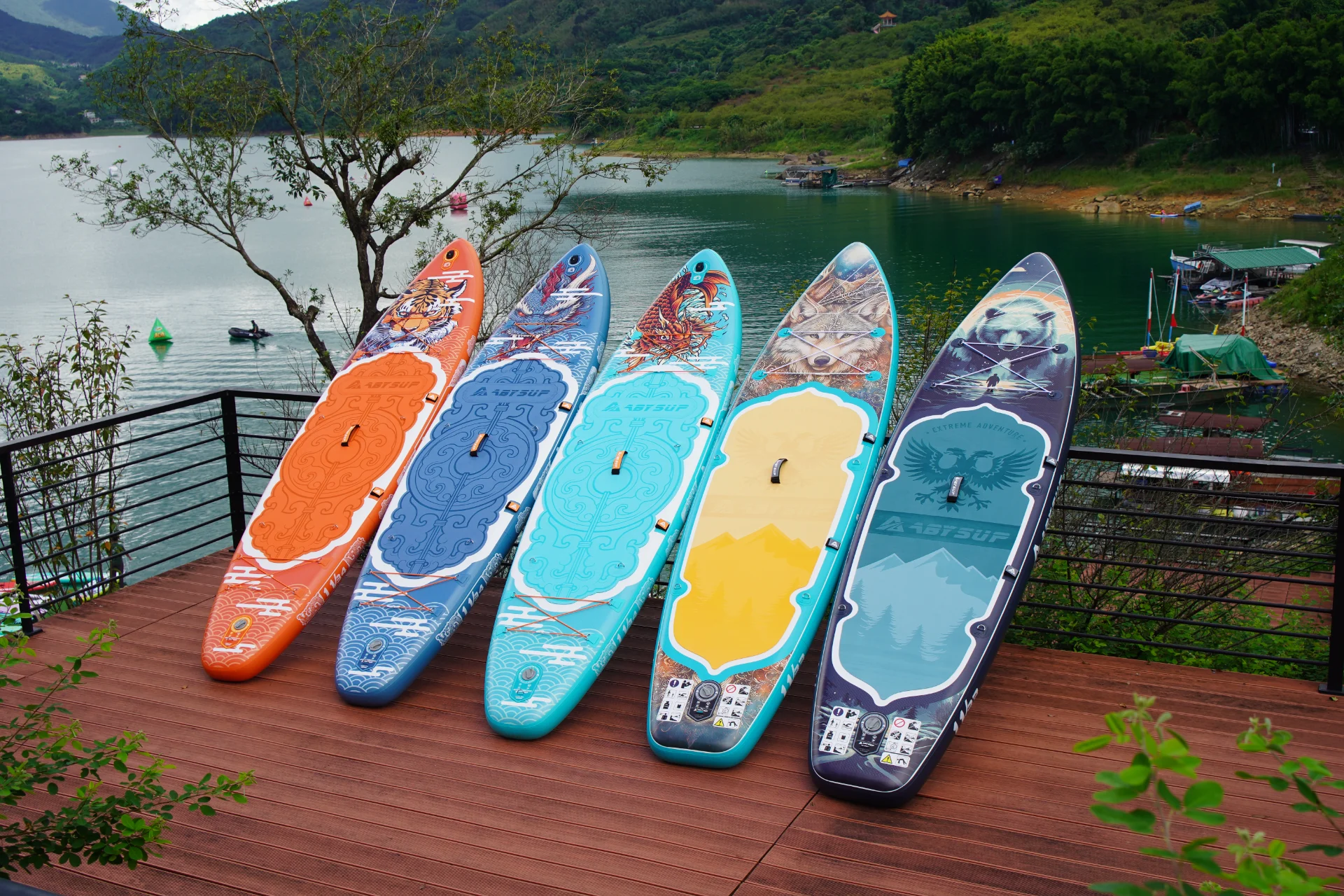
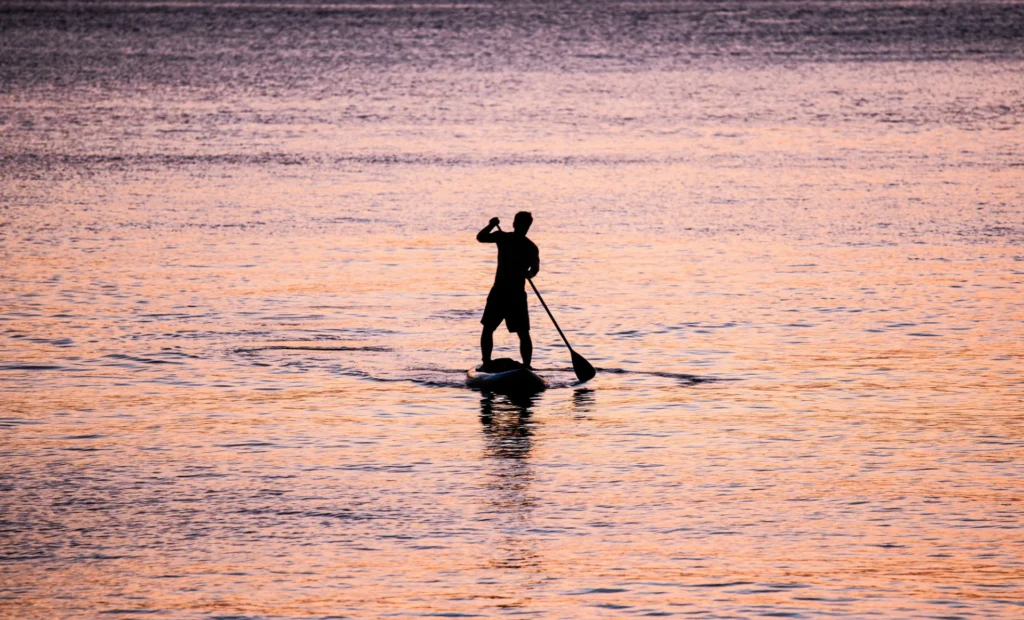
You’ve got the board. The paddle is assembled. The pump is back in the car. And now you’re standing at the water’s edge wondering what the actual sequence is — because every YouTube video skipped the part where you actually get on the board for the first time.
I’m Allen, Senior Industrial Designer at ABYSUP. I’ve spent nearly a decade designing inflatable paddle boards and watching first-timers test prototype after prototype — which means I’ve seen every variation of falling-off-the-board there is. The good news: most of those falls came from missing one of five small details that nobody teaches.
This is the exact step-by-step I walk friends through when they take their first paddle. No grand philosophy, no abstract balance lectures — just the sequence that gets you from “standing on the shore holding a board” to “actually paddling and enjoying it” in under 20 minutes.
Pick the Right Day Before You Pick the Right Stance
The single biggest factor in whether your first paddle is fun or miserable isn’t your skill — it’s the conditions you chose. Choose wrong and even an experienced paddler will struggle.
What “good first paddle conditions” actually looks like
- Wind under 8 mph (13 km/h). Anything above this and the board will drift faster than a beginner can correct. Check the forecast on your phone before driving to the launch.
- Flat water — no visible chop or whitecaps. Lakes, ponds, slow rivers, and protected bays are ideal. Open ocean is not a first-paddle environment.
- Air temperature above 18°C (65°F). Cold weather means you’ll be tense, your muscles will work harder, and falling becomes genuinely unpleasant.
- Water depth at the launch around waist-high. Shallower and you’ll scrape the fin; deeper and you can’t stand to reset if you fall.
- A clear shoreline to return to. You want a sandy or gentle bank within visual sight, not a 2-mile stretch of cliffs.
Time of day matters more than you’d think
Early morning — within two hours of sunrise — is almost always the calmest part of the day. Wind picks up as the sun heats the ground and creates pressure differentials. By 2 PM most lakes that were glassy at 7 AM have noticeable chop.
If you can only paddle in the afternoon, paddle into the wind on your way out and let it push you back. Beginners always do this backwards — they let the wind push them out, then realise they have to paddle into a headwind on tired arms to get home.
Before you even get to launch technique, you should already know which board you’re working with — because the right board makes all of this easier. Our complete inflatable paddle board guide walks through the sizing and selection decisions that affect your first-paddle experience.
The Pre-Launch Setup Most People Get Wrong
Before your foot touches the board, four things need to be right. Get any of them wrong and you’ll spend the next 30 minutes frustrated.
Check your board pressure — actually check it
The single biggest cause of “this board feels terrible” first sessions is underinflation. People stop pumping when their arms get tired, not when the gauge reads correctly.
Quality inflatable SUPs are designed to work at 14–15 PSI minimum. Below that, the board flexes under your weight, drags through the water, and feels mushy. Every quality pump includes a pressure gauge — use it before you step onto the water, not after.
Set your paddle to the right length
The classic rule: your paddle should be 8–10 inches taller than your height. For a first-time paddler, set it closer to the +9 inch mark — slightly longer than aggressive paddlers use, which gives you more leverage during the slower, more controlled strokes you’ll start with.
To check: stand the paddle upright next to you. The handle should reach somewhere between your wrist (raised straight up) and the base of your fingers. Too short and you’ll hunch over; too long and your shoulder will fatigue within 15 minutes.
Attach your leash before anything else
Your leash is the single most important safety item on the water. It connects you to the board so that if you fall, the board doesn’t drift 30 feet away while you swim after it. Attach it to your ankle (or calf, for SUP yoga and fishing) before you step on the board, not after.
The standard recommendation for flat-water paddling is a coiled leash 8–10 feet long. River paddling uses different leash systems for safety reasons — never use a fixed ankle leash on moving water.
Place the board in shallow water — fin clear, deck up
Walk the board into water that’s about knee-deep. The fin needs to be fully submerged and not touching bottom — fins are surprisingly easy to damage on rocks or hard sand. The deck pad faces up, obviously, and the nose (the more pointed end) faces the direction you want to paddle.
“During a beginner test session in Florida last year, I watched five people in a row launch from ankle-deep water and immediately bend their fins on the bottom. Now I tell every first-timer the same thing: walk out until the water is over your knees, then put the board down. It looks like more effort. It saves your fin.” — Allen Xiao, ABYSUP Design Team
Getting On the Board Without Falling Off
This is where most people fall the first time, and it’s the easiest mistake to avoid. The trick is to start from your knees, not your feet.
The kneeling start — always begin here
Standing up immediately is the #1 reason first-timers fall in the first 30 seconds. Your body needs to calibrate to the board’s micro-movements before you ask it to balance while standing. Start kneeling, paddle a few strokes, then stand.
Here’s the exact sequence:
- Position yourself beside the board in waist-deep water. The board floats next to you, parallel.
- Place both hands on the centerline of the board (the long axis from nose to tail), about where your knees will land.
- In one motion, lift yourself up and slide your knees onto the board — one knee at a time is also fine. Land slightly behind the center handle, not on top of it.
- Keep your weight low and centered. Don’t immediately sit back on your heels — stay on your knees with your butt slightly raised, body weight over your hips.
- Grab the paddle (which has been floating beside the board on its leash, or laid across the board ahead of you).
The first few strokes — from your knees
Take 5–10 paddle strokes from your knees before standing up. This does three things:
- Gets you out of the shallow launch area (reduces risk of bumping the fin)
- Gives your body time to feel the board’s movement
- Lets you experience how the paddle feels in the water — angle, pressure, return
Paddle on one side, then switch to the other side after a few strokes. Keep your strokes short and controlled. Don’t try to power forward yet — just get comfortable with the motion.
Standing Up: The Move Everyone Overcomplicates
Once you’ve paddled comfortably on your knees for a couple of minutes, it’s time to stand. This is the moment where every YouTube tutorial gets dramatic. It doesn’t need to be.
The four-step stand-up sequence
- Plant your paddle horizontally across the board in front of you, with both hands gripping it. This becomes your stability bar during the transition.
- Move one foot at a time from kneeling to a low squat — bring your dominant foot up first, flat on the deck where your knee just was, then the other foot. You should now be in a “frog squat” position, paddle still horizontal in front of you.
- Look forward, not down. Pick a point on the horizon. Your inner ear balances better when your eyes have a fixed reference. Looking at your feet makes you fall.
- Slowly stand up by extending your legs — not jumping or pushing off. Keep your knees slightly bent, your feet shoulder-width apart, parallel to each other, with the center handle between them.
Foot positioning is more important than balance
Your feet should be:
- Shoulder-width apart — narrower and you’ll wobble side-to-side, wider and you’ll lose responsiveness
- Parallel to each other — not angled outward, both feet pointing toward the nose of the board
- Centered on the board’s width — about 6 inches in from each rail (the side edges)
- Positioned just behind the center handle — this is the board’s pivot point and gives you the most stable platform
Knees bent, eyes up
Slightly bent knees act as natural shock absorbers — they let your legs adjust to micro-wobbles in the board without your whole body losing balance. Locked-out straight legs transfer every wobble directly to your hips, which makes you fall.
The single best technique cue I give beginners: imagine you’re skiing. Knees soft, eyes forward, paddle as your pole. That mental image solves about 80% of first-time balance issues.
Basic Paddling Technique: Three Things That Matter, Five Things That Don’t
Paddle technique videos online tend to obsess over fine details that don’t matter for beginners. Here’s the honest hierarchy of what actually affects your first session.
The three things that matter
1. Hold the paddle with the right hand on top. The angled blade should point forward — toward the nose of the board — when the paddle is in the water. Most beginners hold the paddle backward; this is the most common technique mistake. If your paddle has a logo on the blade, the logo faces forward.
2. The top hand pushes down, the bottom hand pulls back. Your power comes from your top hand pushing through the paddle, not from your bottom arm yanking on it. This is why your shoulders fatigue when you’re doing it wrong.
3. Plant the blade fully in the water before pulling. The blade should be submerged up to about the bottom edge of the blade where it meets the shaft. Half-buried strokes are wasted strokes.
Five things you can ignore for now
- Perfect catch and release angles. These matter for racing. They don’t matter for your first paddle.
- Rotation through your core. Yes, advanced paddlers rotate. You’ll naturally develop this over time. Don’t force it on day one.
- Stroke count efficiency. You’re not doing a marathon. Just paddle.
- Switching hand position fluidly. When you switch sides, just stop, change your grip, and continue. Fluid switches come with practice.
- Cadence and rhythm. Paddle at whatever speed feels natural. You’ll find your rhythm naturally over the first hour.
Three or four strokes per side, then switch
Paddle on one side until the board starts veering away from straight, then switch to the other side. For most beginners on flat water, this is around 3–4 strokes per side. You’ll naturally develop a feel for when to switch.
Don’t try to fix steering by paddling harder on one side — switch sides. It’s faster, less tiring, and gives you better directional control.
Falling, Recovering, and What to Do When You Get Tired
You will fall. Everyone falls. The trick is to fall safely and get back on the board without panicking.
How to fall correctly
When you feel yourself losing balance, your instinct will be to grab the board. Don’t. Falling onto the deck is how people bruise ribs, sprain wrists, and crack collarbones. Falling into the water is fine — you’re wearing a leash and you can swim.
The safe fall technique:
- As soon as you feel the wobble pass the point of recovery, push the board away from you with your feet.
- Fall flat to the side, into the water — never forward (you can hit the board) or backward (you can land on the fin).
- Once in the water, pull yourself back to the board using the leash if it’s drifted.
Getting back on the board
This is where most beginners panic and waste energy. There’s a simple technique:
- Float in the water next to the board, perpendicular to it, around the center handle.
- Grab the center handle with both hands.
- Kick your legs hard while pulling with your arms — like climbing onto a pool float.
- Slide your torso onto the board first, then swing your legs up afterward.
- Reset to kneeling position on the centerline, gather your paddle (it’s on your leash), stand up again when ready.
What “tired” feels like — and what to do about it
Beginners almost always overestimate their stamina. SUP looks easier than it is because the workload is distributed across small stabilizing muscles you don’t use elsewhere — your obliques, your foot arches, your shoulder stabilizers.
Signs you’re getting tired before you realise it:
- Your strokes are getting sloppier — blade not fully submerged, switching sides too often
- You’re hunching forward at the shoulders
- Your feet feel “loose” on the deck pad — like you’re not gripping anymore
- You start wobbling on previously easy water
When any of these happen, sit or kneel for 5 minutes. Paddle from your knees back toward shore. Your first paddle should be 30–45 minutes maximum, not two hours. Stamina builds across sessions, not within one.
“At an open-water test session last summer, I watched a strong runner — marathon-fit, athletic, confident — paddle out for what he thought would be an hour. He came back after 22 minutes with arms like jelly. SUP fatigue hits a completely different muscle group than cardio fitness. I tell every first-timer the same thing now: plan for 30 minutes and let it grow naturally from there.” — Allen Xiao, ABYSUP Design Team
Why We Build for Beginners the Way We Do
I’ll be transparent about something most brand reps won’t say out loud: at ABYSUP, we deliberately design our All-Round line to make first-timers succeed — even when that comes at the cost of some advanced-paddler performance metrics.
The 32–33″ width decision
Our All-Round series sits at 32–33″ wide, not the narrower 30″ some performance brands push. Two inches of width feels like nothing on paper. On water, it’s the difference between a beginner standing up on attempt one versus falling six times.
For experienced paddlers, those two inches cost about 5–8% of cruising speed. For a first-timer, those two inches are the difference between “this is fun” and “this is humiliating.” We chose stability margin every time.
The 6″ thickness decision
Some brands chase the “feels like a hardboard” pitch with thinner 4.7″ decks. We stayed at 6″ because the rail volume gives real stability margin — particularly when a beginner shifts weight clumsily, when a kid jumps on, when a dog gets curious about the front of the board.
Yes, the extra thickness reduces responsiveness slightly. For day-100 paddlers, that matters. For day-1 paddlers, it’s the reason you stay dry.
The deck pad coverage decision
Our deck pads extend further than most competitors — covering roughly 70% of the board’s length rather than the more common 50–60%. When a beginner shifts foot position to recover balance, they should always land on grippy EVA, not slippery PVC. That extra deck pad coverage adds about 0.4 lbs to the board weight. We think it’s worth it.
These are trade-offs. Every design decision is. But they’re the right trade-offs for the buyer who’s reading a “first time on the water” guide — because that buyer should be on a board built to give them the best possible first session.
If you’re still in the buying stage, our paddle board sizing guide walks through which board dimensions suit your weight and height. The right board makes everything in this article easier.
The Five Mistakes That Ruin First Paddles (And How to Skip Them)
After watching hundreds of first-time paddlers over the years, the same mistakes show up again and again. If you avoid these five, your first session will be in the top 10% of beginner experiences.
Mistake 1: Trying to stand up before you’ve paddled from your knees
Your body needs 30–60 seconds of kneeling paddle time to calibrate to the board’s movement. People who skip this step fall within the first 30 seconds and lose confidence immediately. Don’t skip it. Even experienced paddlers start kneeling in unfamiliar conditions.
Mistake 2: Looking down at your feet
Your inner ear uses your eyes as a primary balance reference. When you look down, your visual horizon tilts with the board — which makes your brain think you’re falling, which makes you actually fall. Look at the horizon. Always.
Mistake 3: Holding the paddle backward
The angled blade should point forward, toward the nose of the board. About 60% of first-time paddlers hold it backward without realising — they wonder why their strokes feel weak and inefficient. Look at the blade. If it’s curving away from your direction of travel, you’re holding it backward.
Mistake 4: Paddling on the windy side
If there’s any wind at all, the board will turn toward the side you’re not paddling on. Beginners try to fight this by paddling harder on the upwind side. The right solution is to switch to the upwind side regularly — not to power through.
Mistake 5: Not bringing water
SUP is physically demanding even at a slow pace. Most first-timers are dehydrated by the time they get back to shore because they didn’t bring a water bottle. Strap a bottle to the front bungee cord. Hydrate every 10–15 minutes. Your forearms will thank you.
Frequently Asked Questions
How hard is it to use a paddle board for the first time?
Easier than most people expect, if you choose the right conditions and the right board. On a calm lake with an All-Round 10’6″–11′ inflatable SUP at 32–33″ wide, around 80% of first-time paddlers can stand and paddle within their first 15 minutes. The remaining 20% need a few sessions before standing comfortably.
What makes it hard isn’t the activity itself — it’s choosing bad conditions (windy water, crowded launches), bad equipment (narrow performance boards, underinflated), or trying to stand up too quickly. Match the conditions and equipment to your skill level and SUP becomes one of the most accessible water sports there is.
What should I wear for my first paddle boarding session?
Wear something you don’t mind getting wet — because you probably will. Quick-dry shorts or swim trunks, a UV-protective long-sleeve rash guard or athletic shirt, and water shoes or barefoot are the standard combination for warm weather. Avoid cotton (it stays cold when wet) and loose-fitting items that can catch on your paddle.
In cooler water (below 18°C / 65°F), add a 2–3mm neoprene top or full wetsuit — falling into cold water unexpectedly is genuinely dangerous and ruins the experience. Always wear sunscreen, even on overcast days; the water reflection doubles UV exposure, and you’ll burn faster than you expect.
Do I need a life jacket for paddle boarding?
In most jurisdictions, yes — paddle boards are legally classified as vessels, which means a Coast Guard-approved life jacket is required either worn or onboard, depending on your local rules. Even where it’s not legally required, wearing one your first few sessions is strongly recommended. Falls happen, fatigue happens, and a life jacket converts a potential emergency into a non-event.
Inflatable PFDs (waist-pack style) are popular with experienced paddlers because they don’t restrict movement, but a standard Type III foam vest is more reliable and easier to use for beginners. The leash plus PFD combination is the standard safety setup for all flat-water SUP — never paddle without both.
How long should my first paddle session be?
Aim for 30–45 minutes maximum. Beginners almost universally overestimate how long they can comfortably paddle, because SUP uses stabilizer muscles you don’t typically train. Going too long on your first session means arms-like-jelly fatigue, sloppy technique, and increased fall risk on the way back to shore.
Better to end your first session feeling like you could have gone another 15 minutes than to end it exhausted. Stamina and technique build across sessions, not within them. By session 3–4, an hour will feel comfortable; by session 10, you’ll be looking at half-day paddles.
What’s the best paddle board for absolute beginners?
An All-Round inflatable SUP between 10’6″ and 11′ long, 32–33″ wide, 6″ thick. This combination gives you the best balance of stability (wider = easier to stand on), glide (long enough to track straight), and forgiveness (6″ thickness sits higher with more buoyancy).
Avoid narrow racing/touring boards (under 32″ wide) and shorter surf-focused boards (under 10′) for your first board. They’re harder to balance on and less versatile. Your first board should be one you can paddle on a calm lake, do yoga on, take your kid out on, and explore a quiet bay with — that’s what All-Round means, and it’s why we recommend it as the default choice for new paddlers.
Ready for Your First Time on the Water
Your first paddle isn’t about technique perfection — it’s about getting on the water, feeling the board under you, and starting the relationship that will define every paddle after this one. Calm conditions, the right board, and the sequence in this guide will get you there.
If you’re still choosing your first board, our [Link to ABYSUP All-Round Collection] is built specifically for the use case in this article — stable enough for absolute beginners, versatile enough that you’ll still want to paddle it five years from now. Every board in the line is sized for first-timer success.
For B2B dealers and rental operators stocking beginner-friendly inventory, our [Link to ABYSUP Wholesale Program] includes our All-Round series with volume pricing, private-label options, and direct factory support. Beginner boards drive rental conversions and ownership upsells — we’ll talk through what’s working in your market before sending a catalogue.
Whatever board you end up on, the most important advice is the simplest: just go. The first session is always the hardest, and every paddle after it gets better.