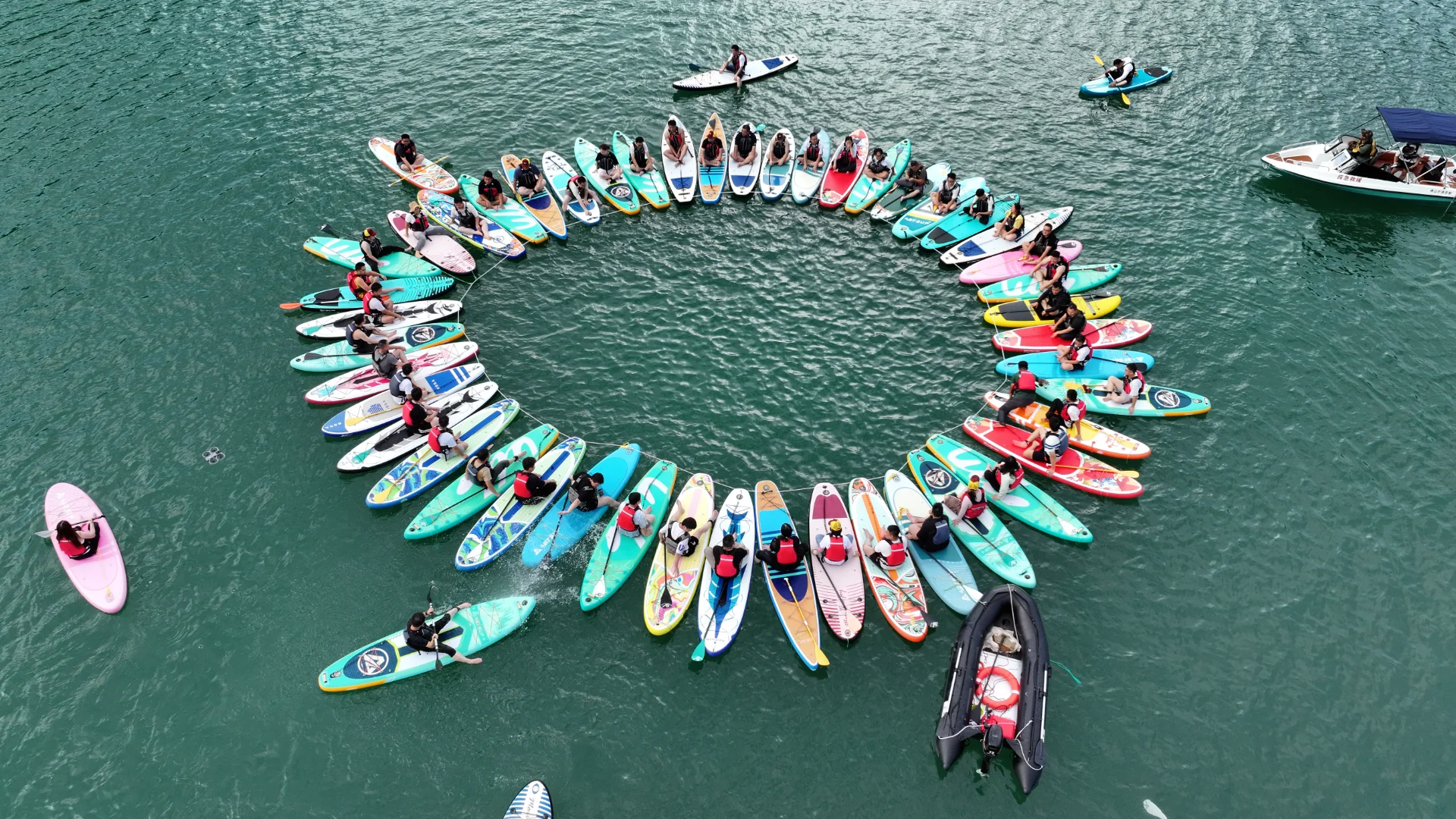
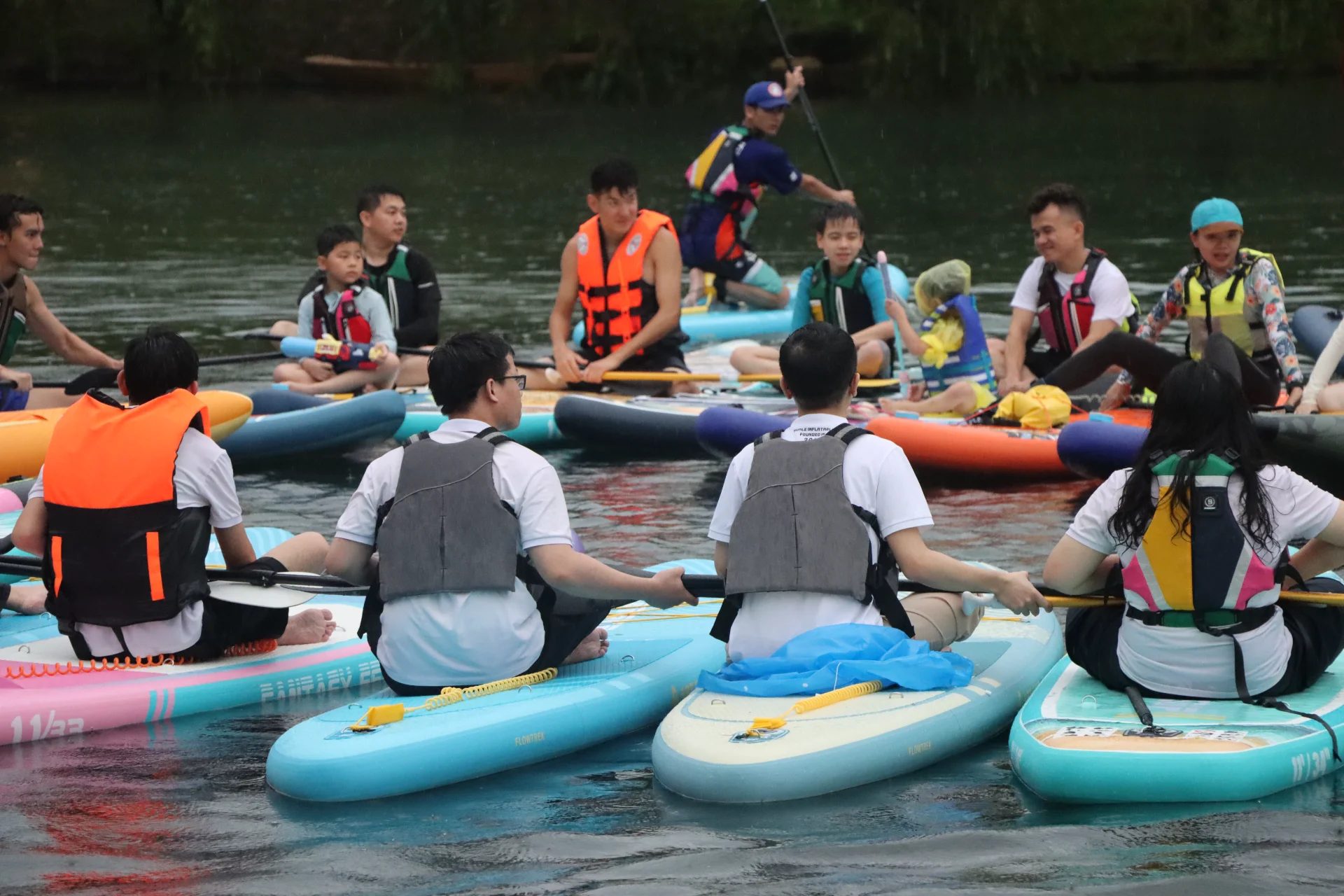
At one point on launch day, I counted the boards floating in a loose circle on the lake. A seven-year-old with a water gun. Two grandparents kneeling for balance. A yoga instructor already standing. Three office colleagues who’d never paddled in their lives. One ABYSUP board model under almost all of them.
I’m Allen, Senior Industrial Designer at ABYSUP, and I’ve spent nearly a decade asking one stubborn question: how do you build a paddle board that doesn’t quietly exclude people? Most boards do. They’re tuned for someone fit, balanced, and already confident — and everyone else gets left on the dock.
This piece isn’t a spec sheet. It’s about who actually ends up standing on our boards, why that mix is no accident, and what designing for a whole community — not just the athlete in the brochure — really takes.
A Community Is Just “Everyone Who Felt Welcome”
People talk about brand “community” like it’s something you build with hashtags. I don’t buy that. A community is simply the group of people who tried your product and didn’t feel stupid doing it. That’s it. Everything else follows.
So the real design question isn’t “how do we look cool?” It’s “who walks up to the water nervous, and how do we get them to their first stroke before the nerves win?” Kids. Parents who haven’t exercised in years. People who can’t swim well and are quietly terrified. If the board only works for the confident 25-year-old, you don’t have a community — you have a customer segment.
“A woman at the event told me she almost didn’t come because she ‘wasn’t sporty.’ Twenty minutes later she was paddling a slow lap, soaked, grinning. She wasn’t sporty. She was just waiting for equipment that didn’t punish her for being a beginner.” — Allen Xiao, ABYSUP Design Team
Standup paddling spread worldwide precisely because it’s one of the most accessible ways onto the water — its low barrier to entry is the whole point. Our job is to protect that, not engineer it away in the name of performance.
The Width That Makes Room for Everyone
If there’s one number that decides whether a board welcomes people or filters them out, it’s width. And the difference is bigger than most buyers realize.
A race-oriented board sits around 26–28″ wide. Fast, yes — and twitchy enough that a first-timer spends the session falling instead of paddling. Our all-round community boards run 33–34″ wide. That extra 6–8 inches isn’t a small bump. It’s a roughly 25–30% wider standing platform, and stability scales hard with width — a few inches can be the difference between “I stood up on my first try” and “I gave up and went home.”
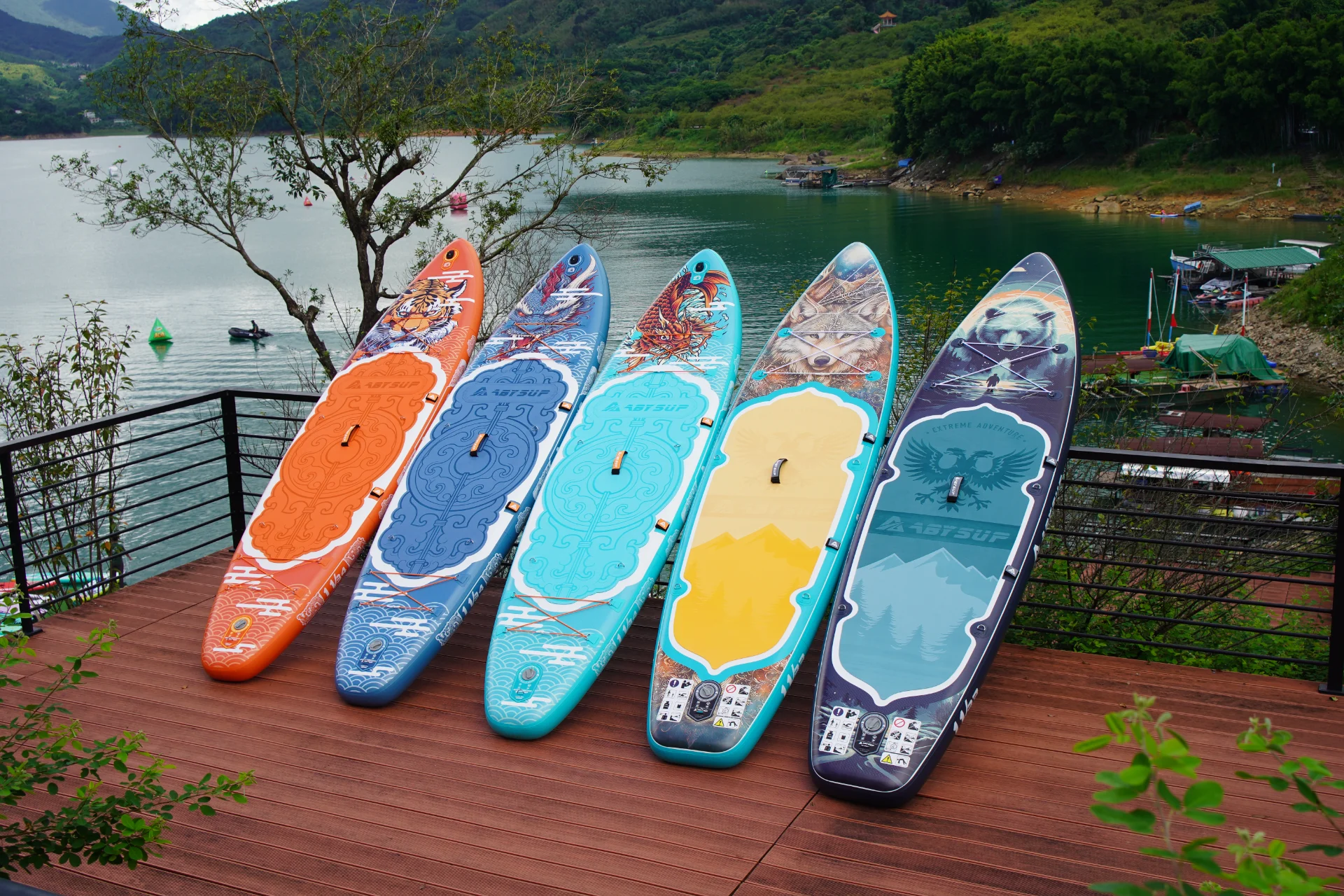
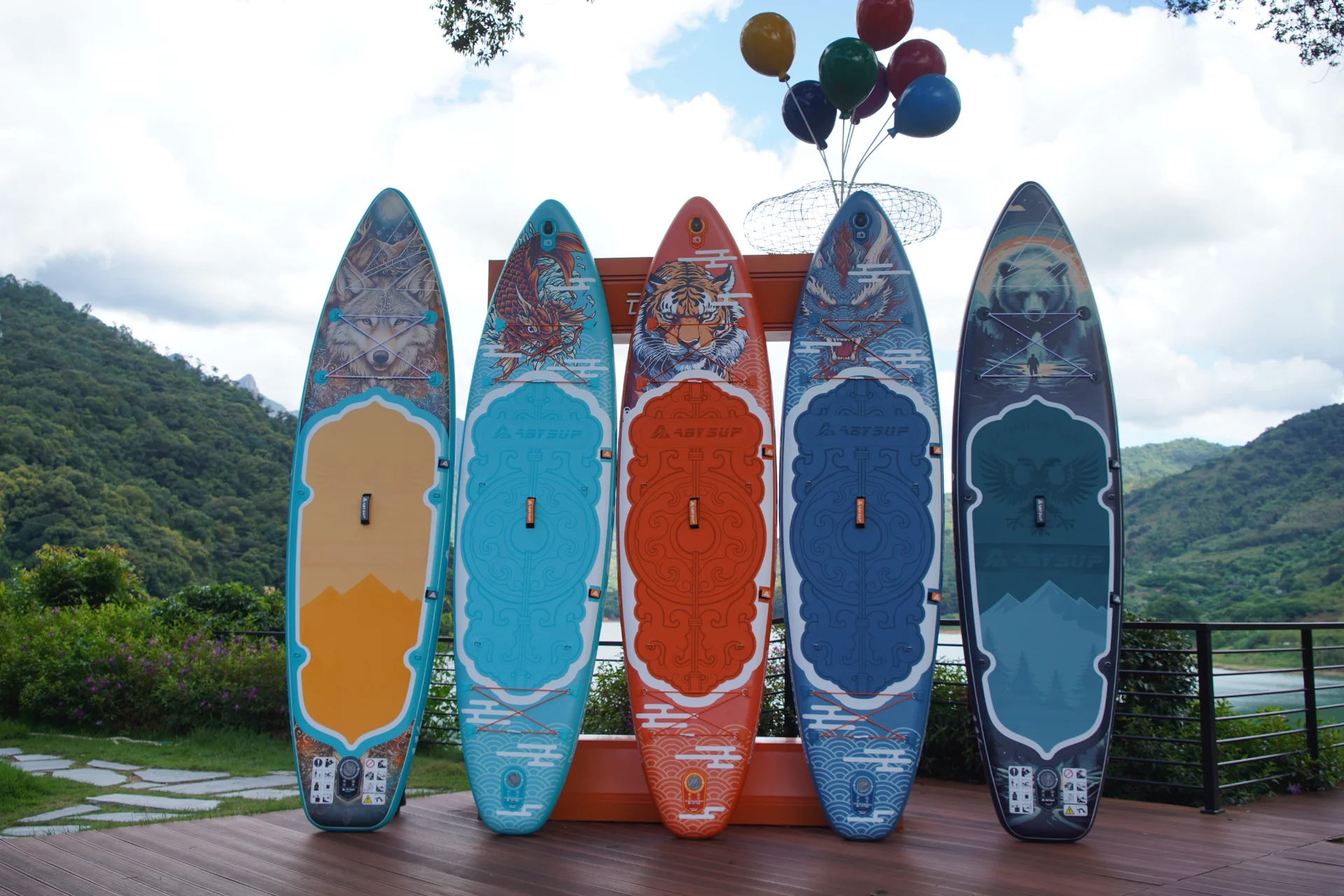
- 33″ FlowTrek — wide enough for a nervous first stroke, narrow enough to still feel like real paddling.
- 34″ Fantasy 12’0″ — our most forgiving deck, with room for a parent kneeling beside a small kid up front.
- Soft, grippy deck pad — full-coverage texture that stayed predictable even after hours of rain on launch day.
Here’s the honest trade-off, because premium buyers deserve it straight: a board this welcoming is not a fast board. If your goal is downwind speed or racing, a 34″ all-round deck will frustrate you — buy a narrower hull instead. Width buys confidence and shared use; it spends glide to do it. We made that trade on purpose, and for a community board it’s the right one. If speed is your priority, our Touring Series is the better starting point.
One Board, Every Skill Level: How That Actually Works
The thing I’m proudest of from launch day wasn’t a sale. It was watching a complete beginner and an experienced paddler share the same board model — one kneeling and wobbling, one carving smooth turns — and both having a good time.
That’s the design target we call “the first thirty seconds.” The moment a beginner steps on is when they decide, subconsciously, whether SUP is “for them.” Get those thirty seconds right and they’re hooked for years. Get them wrong and the board lives in a closet. So we tune the early experience deliberately:
- Stable at zero speed — a beginner who can’t paddle yet still needs to not fall while standing still. Width and rail shape handle that.
- A real carry handle — sounds minor until you watch someone lug an inflated board from the steps to the water. A board lives in your hands as much as under your feet.
- Forgiving, not boring — it has to stay fun for the experienced paddler too, or the community splits in two.
This is the design philosophy we keep coming back to at ABYSUP: we design for the most nervous person in the group, because if they’re comfortable, everyone is. A board that only rewards expertise builds a clique. A board that welcomes the beginner builds a community — and that’s exactly the brief behind our All-Round Series, the wide, stable shape most newcomers learn on. The data backs the approach: instructors trained under International Surfing Association programs consistently start newcomers on exactly these shapes.
Who This Is For (and Who It Isn’t)
Honest self-qualifying saves everyone a return and a bad afternoon. So here’s the plain version.
This is for you if…
- You’re paddling with mixed ability — a family, a friend group, kids and adults sharing gear. The All-Round Series is the natural shared board.
- You’re a first-time owner who wants to actually keep paddling, not fight the board.
- You’re heavier, taller, or bringing a kid or dog aboard — the XL Stability Series (up to ~180 kg) is shaped for exactly that.
- You treat SUP as a platform for yoga or fishing — the Lifestyle Series gives you a full-length deck to work on.
- You hike, travel, or live small and need a board that packs away — the ultra-light Lightweight & Agile Series (18.7 lbs) is built to carry.
- Your water is lakes, calm rivers, sheltered bays — relaxed cruising over racing.
This is NOT for you if…
- You’re chasing speed or distance racing — go narrower with the Touring Series, and don’t let us talk you out of it.
- You want a dedicated surf SUP for breaking waves — different shape entirely.
- You paddle solo, advanced, performance-first and stability is the least of your worries.
If you’re somewhere in the middle and unsure, our paddle board size guide walks through sizing by weight and water type. And resources like Paddling Magazine are worth a read on matching a board to how you’ll actually use it.
Frequently Asked Questions
Is paddleboarding really suitable for all ages?
On the right board, yes — and our launch day was the proof. We had kids and grandparents on the water in the same hour, on the same wide, stable decks. The limiting factor is almost never age; it’s board choice and water conditions.
For children, the rule is simple: a properly fitted life vest, calm sheltered water, and an adult within arm’s reach, ideally on the same board. For older or less confident paddlers, width does the heavy lifting — a 33″ or 34″ deck removes most of the wobble that scares beginners off.
How hard is it to learn stand up paddleboarding?
Easier than people fear, on the right equipment. Most first-timers at our event went from kneeling to standing inside their first lap on calm water. The myth that SUP is hard usually comes from someone being handed a narrow, twitchy board built for a different purpose.
Start kneeling, find your balance, then rise one foot at a time. On a wide all-round board in flat water, that progression takes minutes, not days.
Can one paddle board work for a whole family?
That’s exactly what our wider models are designed for. A 34″-wide 12’0″ comfortably carries an adult with a small child up front, and it’s stable enough to swap between family members of very different sizes throughout the day.
If your family includes confident teens and nervous adults, one all-round board genuinely can serve everyone — that shared-use case is central to how we shape these decks.
Why do you make wide boards instead of faster ones?
We make both, but our community range leans wide on purpose. Width is what lets a beginner, a kid, and an experienced paddler all enjoy the same board — and that shared accessibility is the whole reason the sport grows.
We’re honest that width costs speed. If racing is your goal, a narrower hull is the right tool. But for the families and mixed groups who make up most of our community, confidence beats speed every time.
Can clubs, rentals, or resorts buy ABYSUP boards in bulk?
Yes, and operators are some of our favorite partners — a rental fleet is the ultimate stress test, since one board has to suit a hundred strangers a week. Our all-round community range is built for exactly that kind of mixed, heavy, daily use.
Wholesale pricing, MOQ tiers, and custom branding options are available on request through our partnerships team.
Find Your Place on the Water
The boards are the easy part. The community — the kid with the water gun, the “not sporty” mom who paddled anyway, the colleagues who came as a team and left as paddlers — that’s the part I actually care about. We just build the equipment that lets it happen.
If you’re looking for your first board, or your family’s shared one, start with our All-Round Series and the size guide. And if you run a club, rental, or resort and want a fleet your whole community can ride, our team would love to talk — apply to the ABYSUP dealer program and let’s build it together.
Everyone’s welcome on the water. Come find out where you fit.