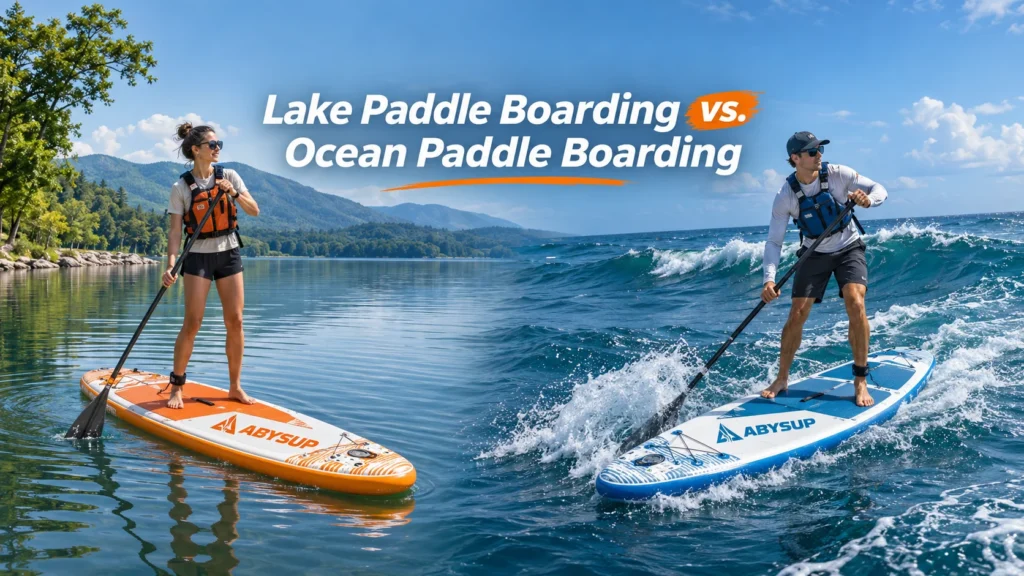
For many people, lake paddle boarding is a relaxing way to enjoy the outdoors. Some prefer paddling across a quiet lake in the morning. Others enjoy exploring coastal bays, following the shoreline, or heading out into the ocean.
Both offer a great experience, but the water conditions are quite different.
Wind, waves, tides, and currents can affect how your paddle board handles. A board that feels stable on a calm lake may be harder to control in coastal waves or strong winds.
So, which environment is right for you? Can you use the same inflatable SUP in both places?
I’m Allen from the ABYSUP Design Team. In this guide, I’ll explain the differences between lake and ocean paddling, discuss which board designs work for different conditions, and share a few things I would check before choosing a SUP.
1. Lake vs. Ocean Paddle Boarding: What’s the Difference?
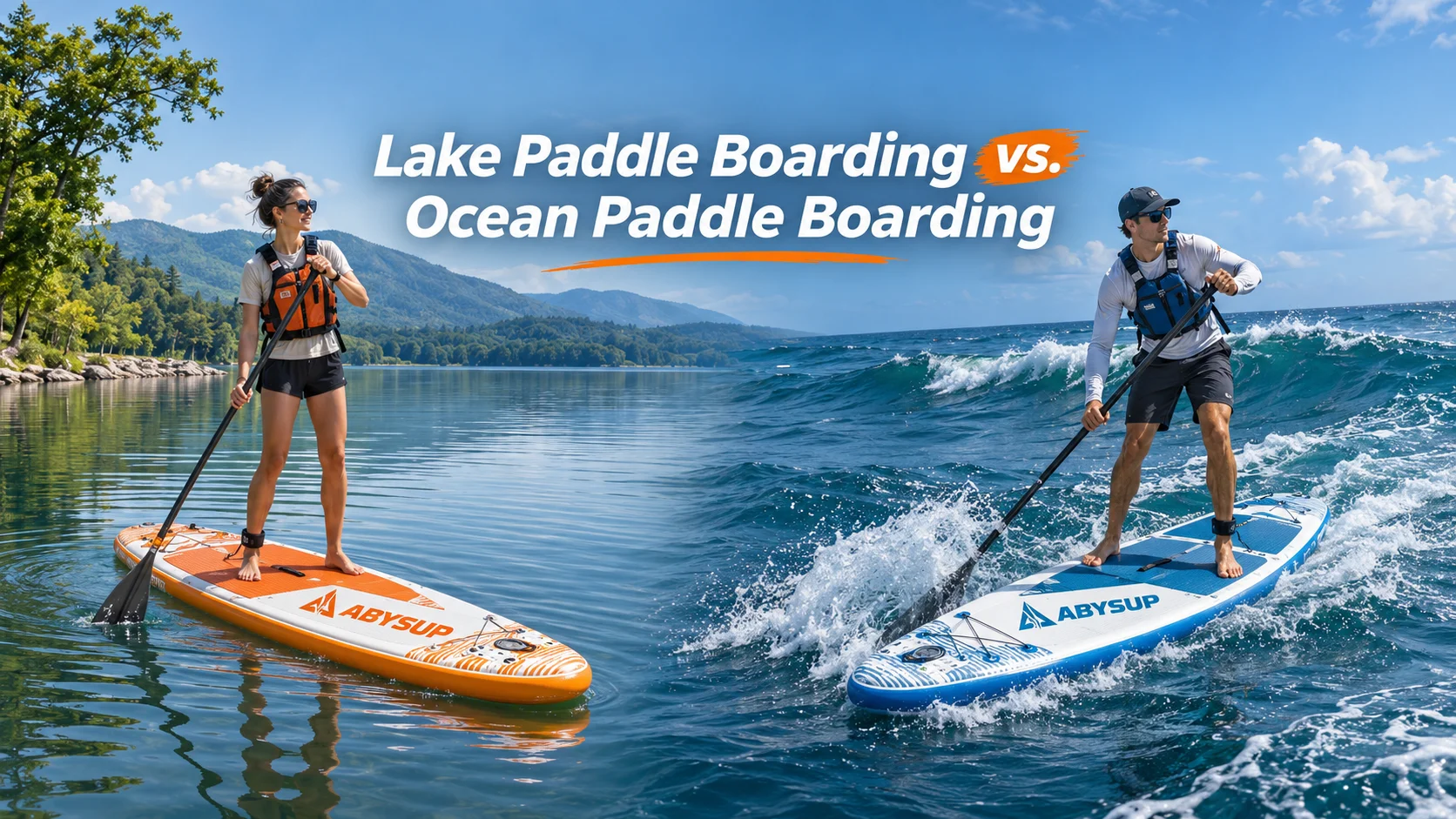
The main difference between lake and ocean paddling is not simply whether the water is fresh or salty. It is how the water moves and how quickly weather conditions can change.
A sheltered lake usually offers a more controlled environment. It may have smaller waves, fewer currents, and plenty of space to practice basic paddling skills.
The ocean is less predictable. Coastal winds, tides, swell, and waves can all affect how a paddle board moves.
Here is a quick comparison of what you can expect.
| Comparison | Lake Paddle Boarding | Ocean Paddle Boarding |
|---|---|---|
| Water conditions | Often calm on sheltered lakes, but open lakes can develop waves. | Waves, swell, and changing coastal conditions. |
| Water movement | Usually less affected by tides, although wind and local currents still matter. | Tides and coastal currents can affect your route. |
| Wind | Wind can create surface chop, especially on large lakes. | Wind can combine with waves and currents. |
| Beginner suitability | Sheltered areas are often good places to learn. | Calm bays may be suitable, but conditions need careful assessment. |
| Board priorities | Stability, easy handling, and versatility. | Tracking, control, and a design suited to expected conditions. |
Why Does the Difference Matter?
Imagine using the same inflatable SUP on two different days.
On a calm lake, you can paddle across relatively flat water. The board feels predictable, and turning is usually straightforward.
Move to an exposed coastline, and things can change. Small waves may hit the board from the side. Wind can push you off course, and even a short trip may require more effort.
Ocean paddling is not always difficult, and not all lakes are calm. A protected coastal bay may actually be easier to paddle than a large lake exposed to strong winds.
2. What Makes Lake Paddle Boarding Different?
Many people begin their SUP experience on a lake. It makes sense. A sheltered lake can provide relatively calm water, accessible launch points, and enough space to practice before attempting more demanding conditions.
It is also a good option for people who want a relaxed day outdoors rather than a hard workout. You can stay close to shore, explore small inlets, or spend time paddling with family and friends.
Why Do Paddlers Choose Lakes?
- More predictable conditions: Sheltered lakes generally have less wave activity than exposed coastal areas.
- Easy recreational use: Beginners can practice standing, turning, and basic paddle strokes.
- Different activities: Lakes are suitable for family paddling, SUP yoga, fishing, and casual fitness sessions.
- Flexible routes: Paddlers can often choose shorter routes and stay closer to their starting point.
Are All Lakes Calm?
No. This is something I always make clear when discussing lake SUPs.
A small lake surrounded by trees may be sheltered from strong winds. A large open lake can be very different. Wind can create waves across the surface, while boat traffic can produce wakes that make balancing harder.
Weather can also change during the day. A calm morning does not guarantee calm conditions in the afternoon.
What Activities Work Well on a Lake SUP?
A versatile All-Round SUP is often a sensible choice for these activities:
- Recreational paddling: Short trips across sheltered water.
- Family trips: Relaxed paddling, provided the board’s size and weight capacity suit everyone on board.
- SUP yoga: A wider, comfortable deck provides more room to change positions.
- Fishing: Extra deck space can help accommodate selected fishing equipment.
For these uses, I usually start by comparing stability, board width, deck space, and maximum weight capacity. Speed is rarely the first thing a recreational lake paddler needs.
3. What Should You Know Before Paddle Boarding in the Ocean?
Ocean paddle boarding can be a great experience. You can explore coastal bays, follow the shoreline, and cover distances that would be difficult to reach on foot.
However, the ocean requires you to pay closer attention to what is happening around you.
Before launching, I would check three things: waves, wind, and water movement. Just because a beach looks like a good place to launch does not mean it is suitable for SUP.
Waves, Swell and Tides
Waves affect how your board moves and how easily you can maintain your balance. Even relatively small waves coming from different directions can make paddling more difficult.
Swell is different from the shorter waves you may see near the shore. It can travel long distances before reaching the coast. Conditions farther offshore may therefore be different from what you see from the beach.
Tides also matter. They affect water depth, launch locations, and the movement of water around bays, inlets, and narrow channels.
If you plan to paddle along an unfamiliar coastline, check local tide information. Avoid routes where strong currents could make returning difficult.
Understand Offshore, Onshore and Crosswinds
Wind direction is just as important as wind speed.
- Offshore wind: Blows from land toward the sea. It can push paddlers away from shore and make returning difficult.
- Onshore wind: Blows from the sea toward land. It can create choppy water and make landing harder.
- Crosswind: Blows across your intended route. It can push the board sideways and make it harder to stay on course.
Do Not Ignore Coastal Currents
Rip currents are another hazard. They are strong channels of water flowing away from shore, often forming around breaks in sandbars or near coastal structures.
Rip currents are not limited to ocean beaches. The U.S. National Weather Service also identifies them as a hazard at Great Lakes beaches where breaking waves are present.
Avoid areas marked as unsafe because of strong waves or currents. If you visit an unfamiliar beach, ask local lifeguards about current conditions before entering the water.
For more information, see the National Weather Service guide to dangerous currents.
My view is that a general-purpose inflatable SUP is not a replacement for a purpose-built surfboard. It should also not be taken into exposed ocean conditions without the right board, experience, and safety preparation.
4. How to Choose the Best Paddle Board for Lakes and Rivers
After deciding where you plan to paddle, the next question is which SUP best fits your needs.
I would not choose a board based on length alone. A wider board is not automatically the most stable option for every paddler, either.
Board shape, width, length, thickness, volume, fin configuration, and construction all affect performance. Look at the complete design rather than focusing on one measurement.
Board Width: Stability and Standing Space
A wider board generally provides more room to stand. This is useful for beginners, families, and people who want more space on the deck.
However, extra width can also increase water resistance. If a board is too wide for your size and paddling style, it may feel slower and less comfortable over longer distances.
Board Length: Maneuverability and Tracking
Longer boards generally track better in a straight line. They are worth considering for longer lake routes and distance-focused paddling.
Shorter boards are usually easier to turn and maneuver. They can work well for casual paddling and smaller waterways.
When I help compare two SUP models, I look at the whole design rather than one measurement. Width affects standing space, length affects tracking, and the board’s shape and fin setup also influence how it handles. A good board is the one that suits the paddler and the water, not simply the one with the biggest dimensions.
— Allen Xiao, ABYSUP Design Team
Which SUP Design Should You Consider?
For most recreational paddlers, I would first compare an All-Round SUP with a Touring SUP. These two designs serve different purposes. The difference is more than just a few inches in length.
| Specification | ABYSUP All-Round | ABYSUP Touring |
|---|---|---|
| Design focus | Versatility and recreational use | Tracking and longer-distance paddling |
| Board shape | General-purpose outline | More streamlined outline |
| Typical use | Lakes, suitable rivers, and recreational paddling | Longer lake routes, fitness, and suitable coastal trips |
| Main consideration | Stability and easy handling | Directional tracking and paddling efficiency |
Note: Individual models and configurations may differ. Always check the latest product specification sheet before making a purchase.
When Should You Choose an All-Round SUP?
If most of your paddling takes place on lakes, sheltered bays, or suitable slow-moving rivers, an All-Round SUP is a sensible place to start.
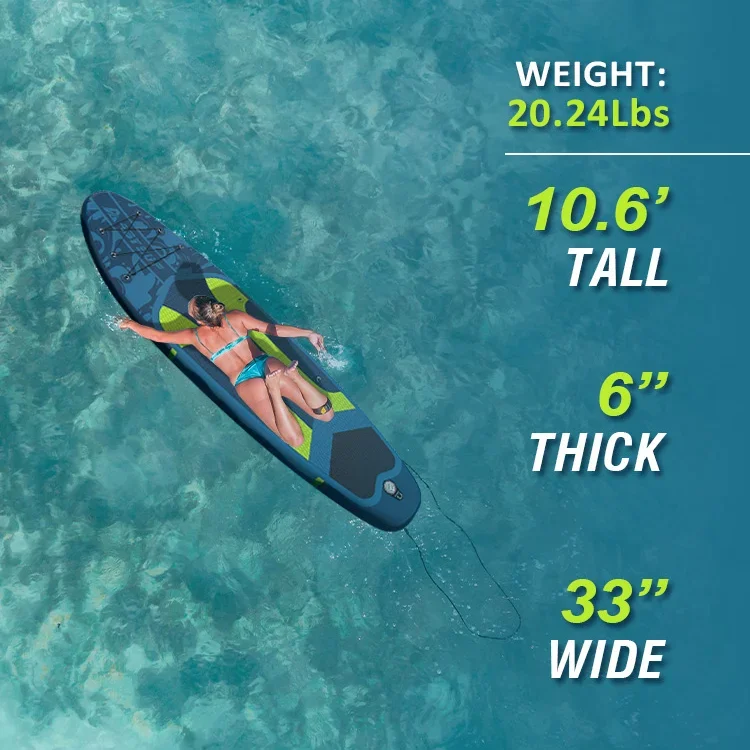
For example, the ABYSUP All-Round range includes a 10’6″ × 32″ × 6″ platform designed for recreational use. Its wider outline provides useful standing space, while its general-purpose shape makes it suitable for different activities.
See the ABYSUP All-Round inflatable SUP range to compare the available models.
When Should You Consider a Touring SUP?
If you regularly paddle longer distances, a Touring SUP deserves a closer look.
Its streamlined shape and fin configuration are designed to help the board maintain direction and glide more efficiently.
The ABYSUP Touring range includes 11-foot and 12-foot models. Their pointed nose profiles and touring-oriented designs make them different from general-purpose recreational boards.
That does not mean a Touring SUP is automatically better for the ocean. A touring shape does not make a board suitable for every wave, current, or coastal condition.
Compare the ABYSUP Touring paddle board range if longer-distance paddling is a priority.
Image Alt: ABYSUP All-Round and Touring inflatable SUP models compared for lake and river paddling.
5. How to Prepare for a Safe Paddle Boarding Session
Choosing the right board is only one part of a good paddling experience.
I would rather see someone spend five minutes checking the weather than spend those same five minutes choosing a more expensive accessory.
Before leaving, review the forecast, water conditions, and launch location. This is especially important when moving from a familiar lake to an unfamiliar coastline.
Check These Conditions Before Launching
- Wind speed and direction: Pay attention to offshore winds and changing forecasts.
- Wave conditions: Check for breaking waves, swell, and boat wakes.
- Currents and tides: Find out whether water movement could affect your route or return.
- Water temperature: Dress for the water temperature, not just the air temperature.
- Launch and landing points: Identify suitable entry and exit locations before setting off.
- Local rules: Check whether the area has specific paddling or boating restrictions.
If you want to understand how wind affects different paddling locations, read our SUP wind speed and paddle boarding guide.
Do Not Forget Your Safety Equipment
Your equipment should match the water you plan to paddle.
Check that you have an appropriate personal flotation device (PFD), a leash suitable for the environment, and a way to contact someone in an emergency.
For paddlers in the United States, the U.S. Coast Guard states that a stand-up paddleboard used outside designated swimming, surfing, or bathing areas is considered a vessel under federal boating regulations. Applicable life jacket carriage requirements should be reviewed before launching.
You can review the U.S. Coast Guard boating safety FAQs for more information. State and local rules may also apply.
A Simple Pre-Launch Checklist
- Board checked for visible damage.
- Inflation pressure checked against the manufacturer’s recommendation.
- Fin fitted and secured correctly.
- Paddle adjusted and locking mechanism checked.
- Appropriate PFD and leash prepared.
- Weather forecast and route checked.
- Phone and essential items stored securely.
One last thing: do not assume conditions will remain the same throughout your trip. If the wind picks up or the water becomes rougher, turn back early. There is no benefit in pushing beyond your ability.
6. What Should SUP Retailers Consider When Choosing Products for Different Markets?
There is another side to the lake-versus-ocean question.
If you sell inflatable paddle boards, the type of water in your local market can influence which products customers are likely to consider.
A retailer near a recreational lake may attract beginners, families, and occasional paddlers. A coastal watersports shop may see more interest in longer-distance paddling, fitness, and exploring sheltered bays.
These are useful starting points, not fixed rules. Local customer research and actual sales figures should guide your final product selection.
What Does the Paddlesports Market Tell Us?
The Outdoor Industry Association’s 2026 Paddlesports Report provides useful context for businesses selling watersports equipment.
According to the report, more than 34 million Americans participated in paddlesports during 2025. Participation increased by 446,000 compared with 2024.
Stand-up paddling also recorded 5.8% growth over a three-year period. Another figure worth noticing is that approximately 85% of paddlers go out fewer than eight times a year.
| Industry Indicator | Reported Figure | Why Retailers Should Notice |
|---|---|---|
| U.S. paddlesports participation in 2025 | 34 million+ | Shows the size of the wider paddlesports audience. |
| Growth from 2024 | +446,000 participants | Indicates continued participation growth. |
| Stand-up paddling growth | 5.8% over three years | Provides a positive signal for the SUP category. |
| Occasional paddlers | About 85% participate fewer than 8 times annually | Highlights the importance of accessible recreational products. |
Source: Outdoor Industry Association, 2026 Paddlesports Report. These figures cover paddlesports overall, not inflatable SUP sales alone. The 5.8% figure refers specifically to stand-up paddling growth over three years.
You can read the 2026 Paddlesports Report summary for the full industry context.
Build a Product Range Around Local Customers
From a product-selection perspective, I would start with a few clearly differentiated categories rather than filling the store with boards that do almost the same thing.
- Lake and recreational markets: Start by comparing All-Round SUPs. Stability, deck space, and easy handling matter to many recreational customers.
- Coastal and distance-focused markets: Consider adding Touring SUPs for customers who want better tracking and longer paddling sessions.
- Travel and outdoor markets: Lightweight models may appeal to customers who regularly carry and transport their equipment.
- Family and fishing markets: Wider, higher-capacity, or activity-focused boards can provide additional options when customer demand supports them.
Do Not Stock Every Model at Once
A larger product range does not automatically mean better sales.
If several models have almost identical dimensions and uses, customers may struggle to understand why they should choose one over another.
I would rather see a retailer start with a clear All-Round option, add a Touring model when local demand justifies it, and then expand based on customer questions and actual sales.
For distributors and retailers evaluating a new SUP brand, product specifications, construction information, accessory packages, and after-sales arrangements should all be reviewed before placing a larger order.
If you are considering a brand partnership, learn more about the ABYSUP dealer and distributor program and discuss which product categories may fit your market.
7. Frequently Asked Questions
Is Lake Paddle Boarding Easier Than Ocean Paddle Boarding?
Generally, yes, if the lake is sheltered and the water is calm. Lakes often provide a more predictable environment for learning basic paddling skills.
However, large lakes can develop strong winds, waves, and dangerous currents. Always check local conditions before launching.
Can You Use the Same Inflatable SUP in Lakes and Oceans?
Yes. Many inflatable All-Round SUPs can be used in both environments when conditions are suitable.
A versatile board can work well on calm lakes, sheltered bays, and gentle coastal water. However, it should not be treated as suitable for every type of ocean condition.
What Is the Best Paddle Board for Lakes and Rivers?
For recreational paddling on calm lakes and suitable slow-moving rivers, an All-Round SUP is a practical starting point.
Check the board’s width, length, weight capacity, fin configuration, and recommended inflation pressure before choosing a model.
Can Beginners Paddle Board in the Ocean?
Beginners can learn in carefully selected sheltered coastal locations, provided the conditions are suitable and they have the necessary skills and safety equipment.
Open beaches, breaking waves, strong currents, and offshore winds are not appropriate starting points for inexperienced paddlers.
Are Lakes Always Safer Than the Ocean for SUP?
No. A sheltered lake may offer easier conditions, but larger lakes can experience strong winds, short-period waves, and dangerous currents.
Even the Great Lakes have rip current hazards near beaches with breaking waves. The actual conditions matter more than the type of water body.
Do You Need a Different SUP for Ocean and Lake Paddling?
Not necessarily. A versatile All-Round board can cover many recreational activities.
If you regularly paddle longer distances, a Touring SUP may be a better choice. Your decision should depend on water conditions, distance, paddler weight, and intended use.
8. Choose Your SUP Based on Where and How You Paddle
Lake and ocean paddling offer different experiences, but neither is automatically the better choice.
A sheltered lake is often a comfortable place to learn and enjoy recreational paddling. The ocean offers more variety, but waves, wind, tides, and currents require greater attention.
When choosing a board, start with the conditions you expect to encounter. An All-Round SUP is a sensible option for everyday recreational use, while a Touring SUP is worth considering when longer distances and directional efficiency matter more.
At ABYSUP, our inflatable SUP range covers different paddling needs, from lightweight recreational boards to touring and higher-capacity designs. The important thing is to compare actual specifications and choose a model that fits the intended use.
If you are a paddler looking for your next board, take a closer look at the ABYSUP All-Round SUP range and our Touring paddle boards.
If you are a retailer, wholesaler, or distributor interested in carrying our products, visit our ABYSUP dealer program or contact our team to discuss a potential business partnership.
Choose the right board for the water you paddle. It makes a bigger difference than most people expect.