When people compare inflatable paddle boards, the first things they usually notice are price, appearance and the accessories included in the package.
Those things matter, but they don’t explain why two boards with similar dimensions can feel completely different on the water.
I’m Allen, and I’ve spent nearly a decade focused on inflatable SUP design. In our design work at ABYSUP, we start with a different question: what does the paddler actually need the board to do?
A good inflatable paddle board is not created by adding the longest feature list. It comes from balancing construction, dimensions, stiffness, weight, handling and the intended use of the board.
This is the checklist I use when looking at an inflatable SUP design.

A Good Inflatable SUP Starts With the Right Design Purpose
The first mistake buyers make is asking:
“Which paddle board has the most features?”
The better question is:
“Which board was designed for the way I actually paddle?”
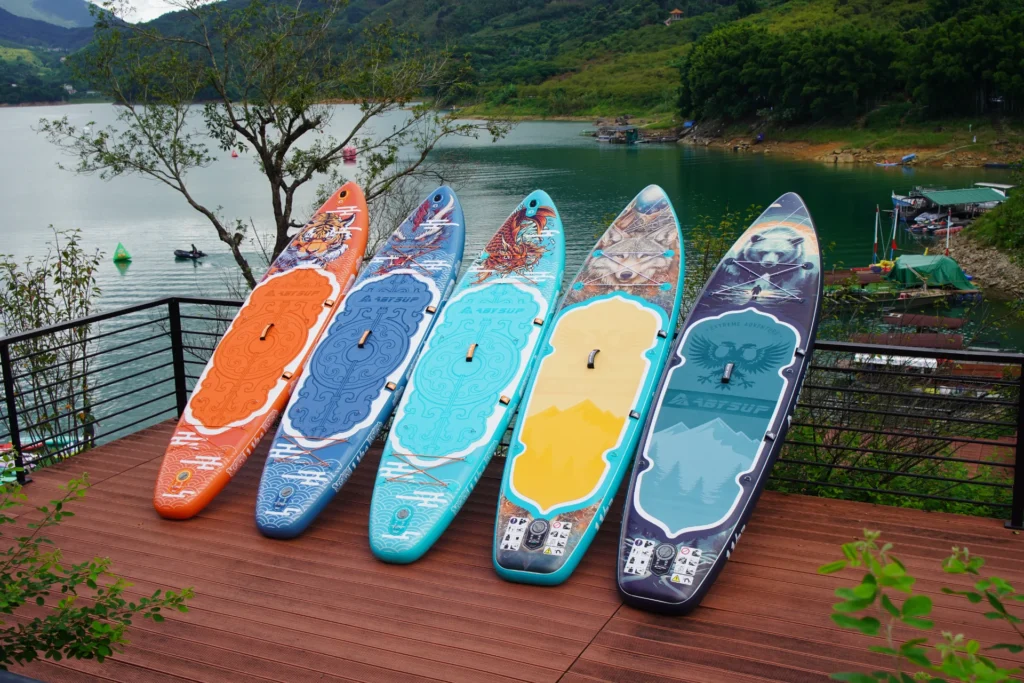
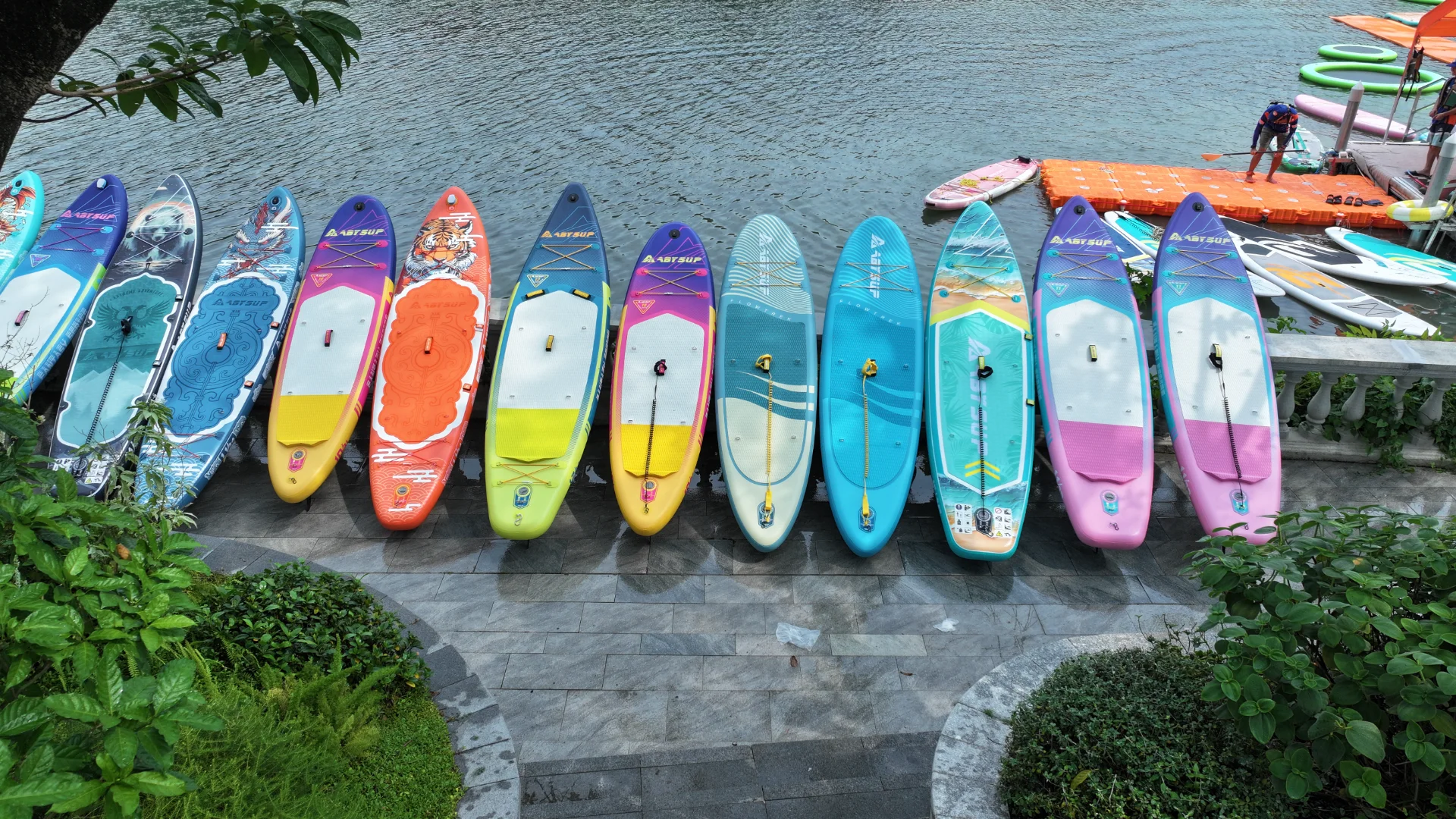
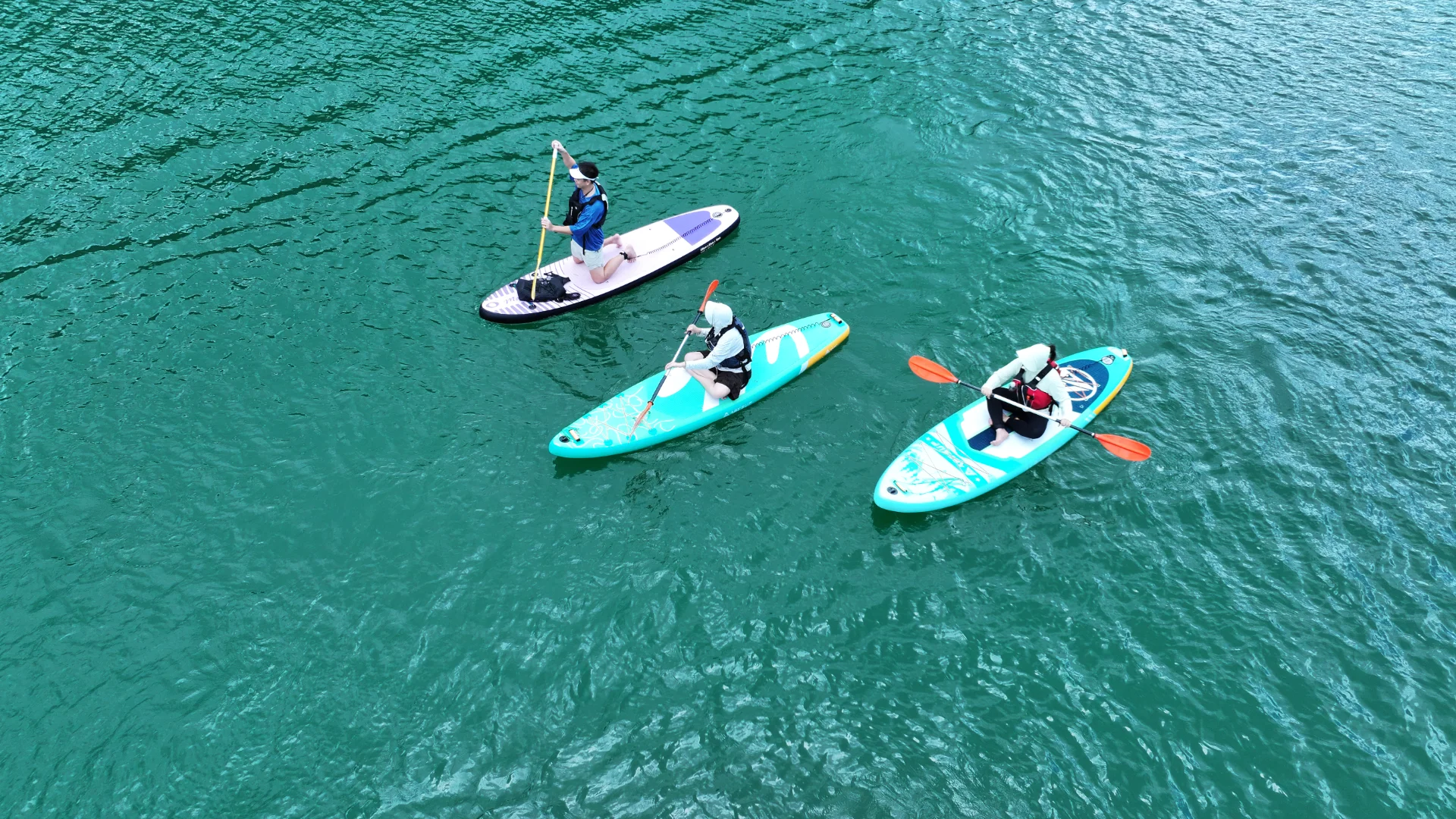
A lightweight board, an all-round board and a touring board are not competing versions of the same product. They solve different problems.
- Lightweight boards focus on portability and easy handling.
- All-Round boards balance stability and versatility.
- Touring boards prioritize tracking and longer-distance efficiency.
- XL Stability boards create more platform for larger loads or shared use.
- Lifestyle boards support activities such as yoga and fishing where deck space matters.
This is why I always look at the design goal before judging individual specifications.
A narrow board is not automatically better. A wider board is not automatically better. A lighter board is not automatically better.
The question is whether the design decisions match the paddler.
Construction Checklist #1: Understanding the Drop-Stitch Core
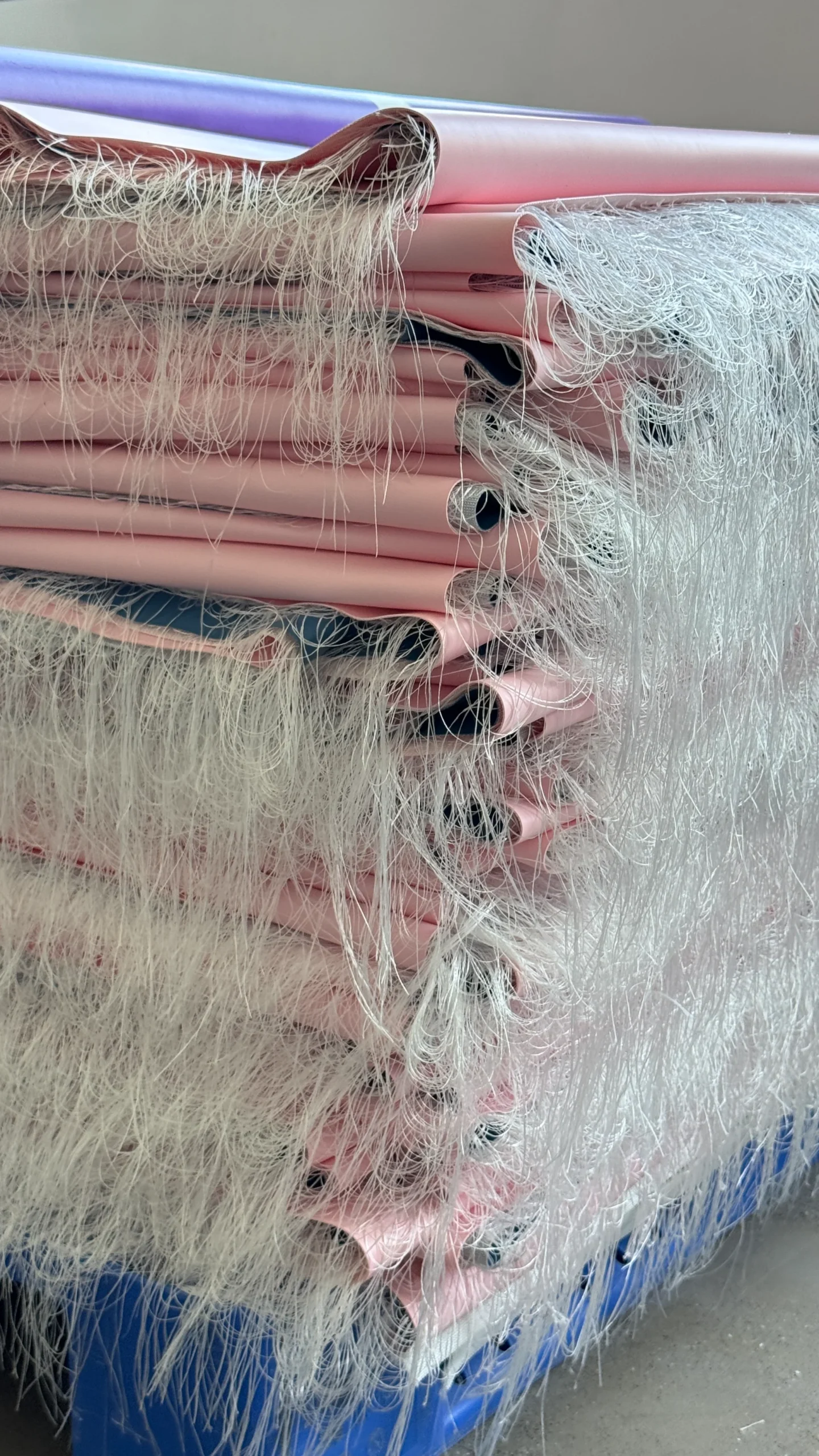
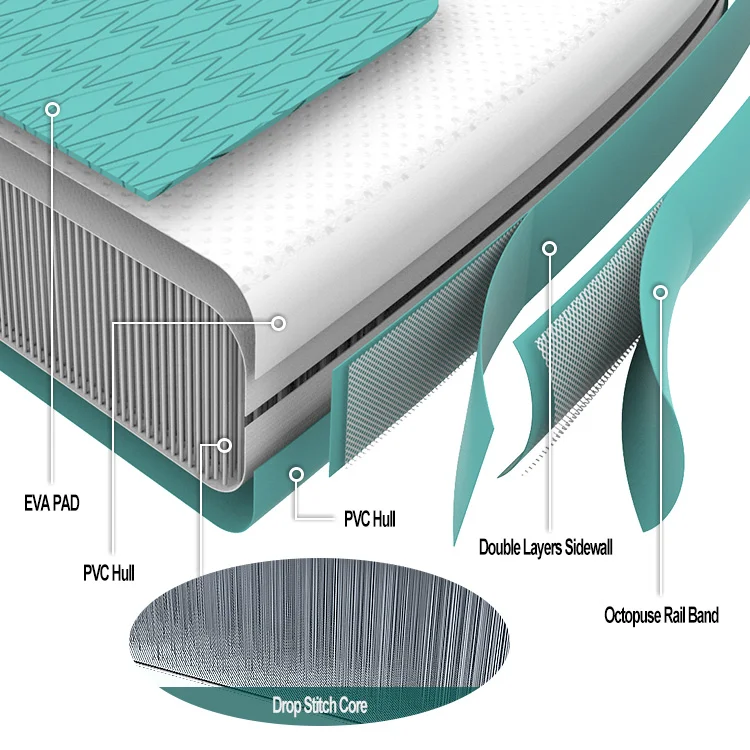
The drop-stitch core is one of the most important structural elements inside an inflatable SUP.
Unlike a simple inflatable tube, a paddle board needs to maintain a relatively flat deck and hull shape under pressure. The internal drop-stitch structure connects the upper and lower surfaces, helping the board hold its designed profile.
When I evaluate a board design, I don’t only ask:
“What material name is printed on the specification sheet?”
I ask:
- How is the structure supporting the rider?
- Does the board maintain its intended shape?
- Does the construction match the size and purpose of the board?
A lightweight recreational SUP and a large stability-focused SUP have different structural requirements because they experience different loads.
The core design principle is simple: the internal structure should support the job the board is expected to perform.
Construction Checklist #2: Why Rail Design Matters
The rail is where the top and bottom sections of an inflatable paddle board meet.
From a design perspective, this area deserves attention because it is part of the board’s overall structural system.
A well-designed rail should:
- maintain the board’s shape;
- work together with internal pressure;
- handle repeated use and transport;
- match the intended performance of the board.
This is also why I avoid judging an inflatable SUP only from the deck graphics or surface appearance.
The rail construction is hidden during normal use, but it influences how the entire board behaves.
Different manufacturers use different approaches, including various lamination and bonding methods. The important point for buyers is not choosing a technical word — it is understanding whether the construction method matches the product’s intended use.
Construction Checklist #3: Board Shape Matters as Much as Materials
A common buying mistake is focusing on materials while ignoring the shape of the board.
Dimensions determine how the board interacts with the water.
Length
Longer boards generally provide more waterline, which can support straighter tracking and smoother forward movement.
Width
Width affects the available platform beneath the paddler. More width can provide more stability and deck space, while narrower designs can feel more responsive.
Thickness
Thickness affects internal volume and the relationship between the paddler and the water.
This is why our design team does not select dimensions independently. A 10-foot lightweight board and a 12-foot stability board should not simply be scaled versions of each other.
They have different jobs.
If you are comparing dimensions, our Paddle Board Size Guide explains how length, width and thickness work together.
Construction Checklist #4: Stiffness Is About More Than PSI
Many buyers see PSI numbers and assume a higher inflation pressure automatically means a better board.
That is too simple.
Stiffness comes from the complete structure:
- drop-stitch construction;
- material layers;
- board dimensions;
- internal pressure;
- rail construction;
- overall design balance.
In our design work, we care about how the board feels when a paddler actually uses it.
A board that is technically stiff but poorly matched to the rider can still feel wrong.
A good design creates the right relationship between stiffness, weight and handling.
“The goal is not to create the stiffest board possible. The goal is to create the right board response for the paddler.” — Allen Xiao, ABYSUP Design Team
Construction Checklist #5: Good Features Have a Purpose
More features do not automatically create a better paddle board.
Every added component affects weight, complexity and user experience.
When we design features, the question is always:
“Does this help the paddler use the board better?”
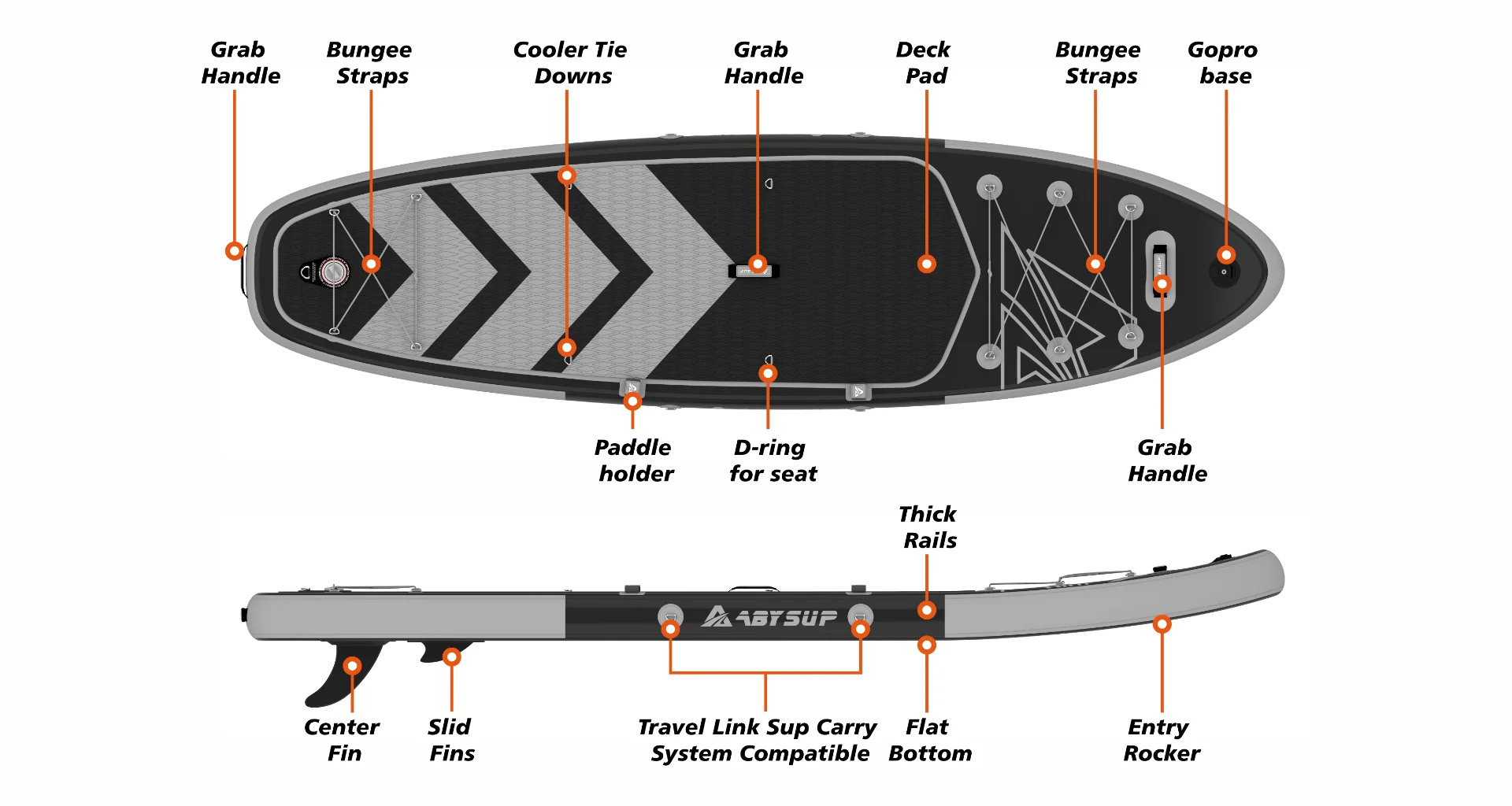
Examples:
- Additional handles can improve carrying convenience.
- D-rings can support specific accessories or activities.
- A full deck pad can improve comfort for yoga or longer sessions.
- Mounting points can support fishing or adventure equipment.
But adding features without a clear purpose can make a board heavier without improving the actual paddling experience.
Good design is selective.
How I Compare Two Inflatable Paddle Boards
If I place two inflatable SUPs side by side, these are the questions I would ask:
| Question | Why It Matters |
|---|---|
| What is the board designed for? | A touring board and a yoga board solve different problems. |
| Do the dimensions match the rider? | Length and width influence stability and handling. |
| Is the construction explained clearly? | Buyers should understand what they are paying for. |
| Are features useful? | Extra components should improve ownership. |
| Does the board fit the paddler’s goals? | The correct board is the one that gets used. |
This is the same approach behind our Compare Paddle Boards page.
Who Should Pay Attention to Paddle Board Construction?
Every buyer benefits from understanding construction, but some paddlers should pay extra attention.
Construction Matters More If You:
- paddle frequently;
- travel with your board;
- plan to keep the board for many seasons;
- compare premium and budget inflatable SUPs;
- need a board for specific activities.
You May Not Need the Most Advanced Construction If:
- you only paddle occasionally;
- your sessions are short and recreational;
- you are still discovering what type of paddling you enjoy.
The goal is not buying the most complicated board.
The goal is understanding what design choices actually improve your experience.
What Makes a Good Inflatable Paddle Board FAQs
What is the most important part of an inflatable paddle board?
There is no single part that determines quality.
A good inflatable SUP comes from the combination of construction, dimensions, stiffness, shape and intended use.
Are more expensive inflatable paddle boards always better?
Not always.
A more expensive board should provide design decisions that match the paddler’s needs, but the right choice depends on whether those decisions solve a real problem for you.
What materials should I look for in an inflatable paddle board?
Look for clear construction information rather than only material names.
Understand the drop-stitch structure, outer materials, rail construction and how these elements work together.
Is a thicker inflatable paddle board better?
Thickness changes volume and board feel, but it is not the only quality factor.
Width, length, shape and construction all influence performance.
How do I compare two inflatable paddle boards?
Start with purpose.
Compare the boards based on intended use, dimensions, construction approach and features rather than only price or accessories.
Choose a Board Designed Around Your Paddling
A good inflatable paddle board is not defined by one specification.
It is the result of many design decisions working together: shape, construction, dimensions and features all supporting the way someone actually gets on the water.
Use our Compare Paddle Boards guide to understand how different ABYSUP categories are designed for different paddling goals.
If you are still deciding on size, start with our Paddle Board Size Guide.
For dealers and wholesale partners, our team can provide current ABYSUP product specifications and category information.