Paddle Board vs Kayak: What’s the Difference?
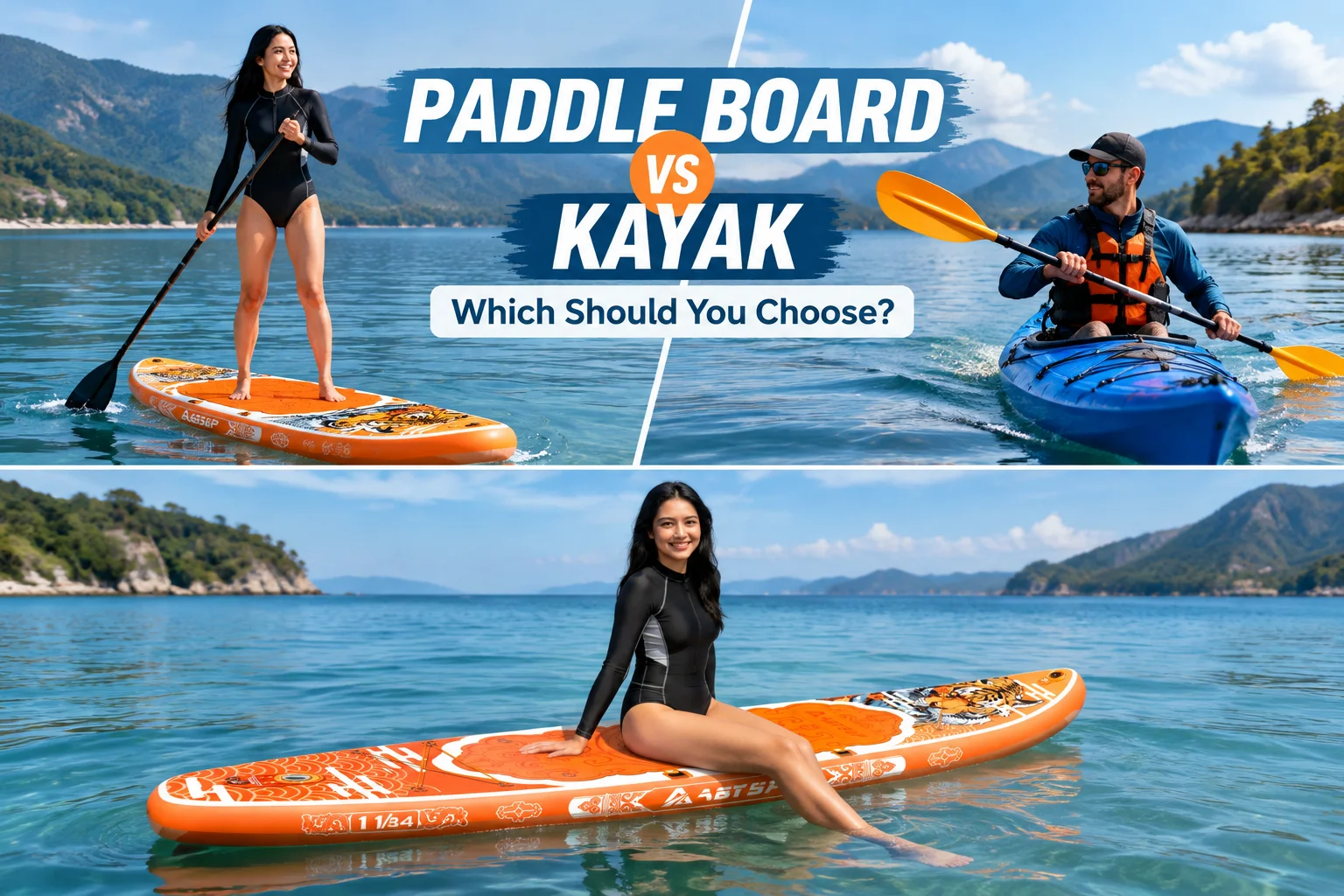
A paddle board and a kayak can both make a day on the water more fun, but they feel quite different to use. On a stand-up paddle board (SUP), you can stand, kneel, or sit. A kayak is usually paddled from a seated position with a double-bladed paddle.
Think about how you actually spend your time outdoors. If you like standing up, taking a swim, or relaxing on the water with your family, a SUP may suit you better. If you prefer sitting down and carrying fishing gear, a kayak may be the more practical choice.
Neither option wins in every situation. Your usual water conditions, storage space, and paddling habits matter more than the name of the equipment.
| Feature | Paddle Board | Kayak |
|---|---|---|
| Position | Standing, kneeling, or sitting | Usually sitting |
| Paddle | Usually single-bladed | Usually double-bladed |
| Deck and Storage | Open deck with optional cargo straps | Storage depends on the kayak design |
| Transport | Inflatable models pack into a bag | Inflatable models pack down; hard-shell models need more space |
Which Is More Stable and Easier to Control?
A kayak often feels easier at first because you stay seated. You don’t need to learn how to balance while standing on a moving board. For someone who feels nervous about falling into the water, that can make a real difference.
A SUP takes a little practice. Your feet, knees, and body all help you stay balanced. Start on your knees if standing feels awkward, then try standing once you’re comfortable with how the board moves. A wider board can help, but your weight, the board’s shape, and the water conditions still matter.
Don’t assume every kayak is more stable than every SUP. A narrow kayak can feel very different from a wide recreational model. The same goes for paddle boards.
What About Wind and Waves?
Wind can push a SUP off course because more of your body sits above the water. A kayak keeps you lower, which may make paddling into the wind feel easier. But strong wind, waves, and currents can be dangerous for both.
If you’re new to either activity, start on calm, sheltered water. Check the forecast before leaving shore, and don’t head into open water just because the lake looks quiet from the beach.
Which Is Better for Speed and Long-Distance Paddling?
For long trips, a well-designed touring kayak can be efficient because its hull is built to move through the water. A touring SUP can also cover distance, especially when its longer shape helps it track in a straight line. Neither is automatically faster in every situation.
Speed depends on the hull or board shape, paddle technique, wind, current, and the paddler’s fitness. A beginner on a touring board may move more slowly than an experienced kayaker. That’s normal.
Comfort matters on longer trips, too. Some people are happy sitting and paddling for hours. Others prefer standing and changing their position throughout the session. If you mainly want to cover distance on a SUP, compare touring designs rather than choosing a board based on appearance alone.
| Your Main Priority | Option to Consider | What to Check |
|---|---|---|
| Long trips in a seated position | Touring kayak | Seat comfort and storage capacity |
| Standing paddling over longer distances | Touring SUP | Length, tracking, and load capacity |
| Easy transport and storage | Inflatable SUP or kayak | Packed size, weight, and setup time |
If you enjoy covering longer distances on a board, take a look at the ABYSUP Touring Paddle Board range. Touring boards are designed with distance paddling and tracking in mind.

Which Is Better for Fishing, Dogs, and Family Outings?
Fishing is a good example of why the choice depends on the person. A fishing kayak may have rod holders, storage compartments, and places to secure tackle. If you bring a lot of gear, those features can save you trouble.
A SUP gives you an open deck. You can move around more freely, and it’s easier to get into the water for a swim when conditions allow. But you need to keep your gear secure and stay within the board’s weight limit. Too much movement or an uneven load can affect balance.
For a relaxed outing with a dog or family, a wide SUP can provide useful deck space. Check the board’s capacity before bringing an extra passenger or pet. Make sure your dog has a suitable life jacket, and consider how easily everyone can get back onto the board from the water.
If you want a board for activities such as SUP yoga, fishing, and relaxed paddling, look at the ABYSUP Lifestyle SUP range. These boards focus on deck space and stability for activities where speed isn’t the main concern.
Are Inflatable SUPs Easier to Transport Than Kayaks?
If you have limited storage space at home, an inflatable SUP can be a practical option. Once deflated, it fits into a carry bag, so you don’t need to store a full-length board in your garage. Inflatable kayaks offer a similar benefit.
Hard-shell boards and kayaks usually need more room and a suitable way to transport them. That can mean roof racks, a larger vehicle, or extra storage space.
Inflatable doesn’t mean maintenance-free, though. You still need to follow the manufacturer’s inflation instructions, check the valve and seams, and let the equipment dry before storing it. Packing a wet board away for long periods isn’t a good habit.
Before buying, compare the packed size, total carrying weight, included pump, repair kit, and warranty terms. A slightly lighter model may be worth considering if you regularly carry it from your car to the water.
Can a Paddle Board Replace a Kayak?
Some SUPs can be used with a compatible kayak seat. That gives you the option of sitting down when you want a break from standing. You may also need a compatible paddle setup, depending on how the board and seat are designed.
Check the attachment points and the manufacturer’s instructions before buying a seat. Not every board supports the same accessories, and a seat doesn’t turn a SUP into a traditional kayak.
If you want one piece of equipment for casual paddling, standing, sitting, and swimming breaks, a compatible SUP setup may work well. If you need enclosed storage or a purpose-built fishing layout, a dedicated kayak may still make more sense.
How to Choose the Right Equipment for You
Before spending money, think about where you’ll paddle and what you’ll do most often. You don’t need the fastest board or the kayak with the most accessories. You need something that fits your plans.
- Choose a SUP if you enjoy standing, an open deck, and different recreational activities.
- Consider a kayak if you prefer sitting or need dedicated space for fishing gear.
- Compare inflatable models if you have limited storage or need to transport your equipment frequently.
- Check the recommended load, dimensions, included accessories, and after-sales support.
- If possible, rent both before buying. A short trial can tell you more about comfort than a long list of product features.
Retailers and distributors can use the same questions when planning a product range. Customers who want relaxed family outings may look for different features from those who want distance paddling or fishing. Clear product specifications and realistic use-case descriptions help buyers choose the right board.
What About Safety on the Water?
Whatever you choose, wear an appropriate life jacket and check local boating rules before heading out. Conditions can change quickly, even on a lake that looks calm from shore.
The U.S. Coast Guard’s 2024 Recreational Boating Statistics report states that 76% of fatal boating incident victims drowned when the cause of death was known. Among drowning victims whose life-jacket use was known, 87% were not wearing one.
These figures cover recreational boating overall. They are not a direct comparison of SUP and kayak accident rates, but they underline why flotation equipment and basic safety preparation matter.
Final Verdict: Paddle Board or Kayak?
A paddle board is worth considering if you enjoy standing, open deck space, and a mix of activities such as casual paddling, swimming, or yoga. A kayak may suit you better if you prefer a seated position, need more room for gear, or plan to paddle for long periods without standing.
For transport and storage, inflatable versions of both can be convenient. The best choice comes down to your usual water conditions, comfort, and what you want to carry.
If you’re leaning toward a SUP, compare the ABYSUP Touring range for distance paddling or the Lifestyle range for fishing, yoga, and relaxed activities. Check the specifications of the exact model before deciding.