Ever watched someone ride a wave with a paddle in their hands? That’s SUP surfing.
It looks fun. But can you do it on a regular inflatable paddle board?
“Yes. Some inflatable paddle boards can handle small waves. But not every SUP is designed for surfing.”
A wide all-round board may work for gentle surf. Steeper waves and sharp turns call for a more specialized board.
This guide covers the basics: which boards work, how to choose a size, and how to catch your first wave.
–>
What Makes SUP Surfing Different from Regular Paddle Boarding?
On a calm lake, you paddle forward and keep your balance. The water stays fairly predictable.
Surfing is different. Waves move beneath your board. You have to watch them, turn at the right moment, and adjust your stance.
| Feature | Flatwater SUP | SUP Surfing |
|---|---|---|
| Water | Mostly calm | Moving waves |
| Main skill | Balance and steady paddling | Wave timing and board control |
| Board priority | Stability and tracking | Turning and wave control |
| Paddle use | Move forward and steer | Catch waves and steer |
Is SUP Surfing Hard to Learn?
“It’s harder than paddling on flat water. Learn to balance and turn before chasing waves.”
Start on calm water. Practice standing, turning, and getting back on your board after falling.
Once those skills feel comfortable, try gentle waves with a qualified instructor.
Can You Surf on an Inflatable SUP?
Yes. Inflatable paddle board surfing works in the right conditions. A suitable recreational SUP can catch small, gentle waves.
But there are limits.
Most all-round inflatables have wide decks and thick rails. These help with stability. They also make sharp turns on steep waves harder.
Where Inflatable SUPs Work Well
• Small waves: Gentle, rolling surf is a reasonable place to start with a suitable board and instruction.
• Everyday paddling: One board can serve for calm-water trips and occasional mild surf, within its intended use.
• Easy transport: Deflate the board, pack it into a bag, and carry it in your car.
When Should You Choose a Surf-Specific Board?
Want to make sharp turns or ride steep waves regularly? A dedicated surf SUP is a better choice.
An inflatable surfing SUP may suit recreational riding. It won’t necessarily offer the same control as a board built specifically for surfing.
What Size SUP Should You Choose for Surfing?
There’s no single board size that works for everyone.
Your weight, experience, and the waves you plan to ride all matter.
A wider board usually feels more stable. A shorter board can be easier to turn. But a small board won’t help much if you can’t balance on it.
Compare Two ABYSUP Board Sizes
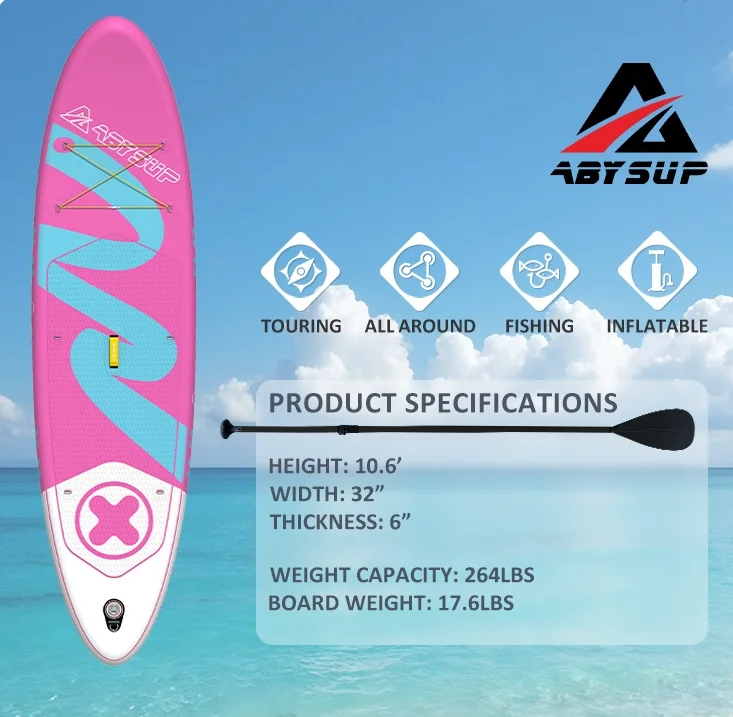
These ABYSUP recreational models offer different dimensions. Both product descriptions mention small-wave use.
| Specification | Compact Agility | All-Round |
|---|---|---|
| Length | 10 ft | 10 ft 6 in |
| Width | 31 in | 32 in |
| Thickness | 6 in | 6 in |
| Board weight | 17.6 lb | 18.7 lb |
Source: ABYSUP published specifications for the 10′ Compact Agility and 10’6″ All-Round Series. These figures describe dimensions and weight, not measured surfing performance.
The Compact Agility is six inches shorter and one inch narrower. It also weighs about 1.1 lb less.
Those differences may affect handling and portability. Board shape, fins, rider weight, and skill still matter.
What Should Beginners Choose?
Choose a board that supports your weight and feels stable enough to control. Don’t buy the shortest option simply because you want to surf.
How to Catch Your First Wave on a SUP
Forget big waves for now. Find a beginner-friendly beach with gentle surf. A local instructor can help you choose a suitable spot.
Step 1: Practice on Calm Water
Stand with your knees slightly bent. Practice turning and moving one foot back without losing balance.
Step 2: Watch the Waves
Notice where the waves break. Watch their direction and speed. Stay clear of other surfers.
Step 3: Paddle and Adjust Your Stance
With your instructor’s guidance, position the board for a gentle wave. Paddle to build speed.
As the wave picks you up, move into a staggered stance. Keep your knees bent and look ahead.
Step 4: Focus on Balance
Don’t worry about sharp turns. Try to stay balanced and ride the wave toward shore.
You may fall a few times. That’s normal. Learn how to fall clear of the board, and keep plenty of space around you.
What Gear Do You Need for SUP Surfing?
Start with a suitable board and paddle. Then check the fins and safety equipment before entering the water.
| Equipment | What to Check |
|---|---|
| Paddle | Suitable length and secure adjustment |
| Fins | Correct fit and secure attachment |
| Leash | Suitable for the surf conditions and local guidance |
| Safety equipment | Appropriate flotation and cold-water protection |
Do You Need Special Fins?
Not always. The right fin setup depends on your board and the waves.
Check the manufacturer’s recommended configuration. Don’t assume that three fins automatically make a board suitable for advanced surfing.
What About a Leash?
Choose a leash suited to the water conditions. Breaking waves, rocks, and strong currents can create different hazards.
If you’re new to SUP surfing, ask a local instructor about the safest setup for that beach.
Is SUP Surfing Safe for Beginners?
Small waves don’t always mean safe water. Currents, wind, and crowded surf breaks can all create problems.
Watch Out for Rip Currents
A rip current is a narrow flow of water moving away from shore.
The US National Weather Service reports that rip currents have been measured at speeds above 5 mph (8 km/h).
That’s faster than most people can swim. Never try to fight a strong current by swimming straight against it.
Check Local Safety Rules
The US Coast Guard explains that SUPs used outside designated swimming, surfing, or bathing areas are generally treated as vessels for federal life-jacket requirements.
Rules vary by location. Check the requirements for your beach and water activity.
Before You Paddle Out
• Check the surf forecast and warning flags.
• Use a lifeguarded beach when possible.
• Stay away from crowded surf breaks.
• Don’t practice alone as a beginner.
If the conditions look beyond your ability, stay ashore.

Which ABYSUP Boards Make Sense for Small Waves?
Many recreational paddlers want one board for different activities. They may paddle on lakes most weekends and occasionally try gentle surf.
For them, an all-round inflatable SUP can make sense.
All-Round vs. Compact Agility
• All-Round SUP: ABYSUP’s 10’6″ model has a 32-inch-wide deck. It’s designed for recreational paddling, including calm water and small surf.
• Compact Agility: This 10-foot model has a narrower 31-inch deck. Its product description highlights easier turning and small-wave use.
Neither should be confused with a dedicated high-performance surf SUP.
Compare the available models in the ABYSUP All-Round inflatable paddle board collection.
What Should SUP Retailers Tell Customers?
Be specific about each board’s intended use.
A recreational inflatable may be suitable for gentle waves. That doesn’t mean it’s designed for steep surf or advanced turns.
When choosing retail stock, check board dimensions, load capacity, fin setup, and the customer’s skill level.
Clear product descriptions help customers choose the right board for the water they actually paddle.
Frequently Asked Questions About SUP Surfing
Can beginners try SUP surfing?
Yes. Learn to balance and turn on flat water first. Then try small waves with a qualified instructor.
How hard is SUP surfing?
It’s harder than paddling on calm water. You need to control the board while judging moving waves.
What size SUP is best for surfing?
It depends on your weight and experience. Wider boards tend to feel more stable. Shorter boards can be easier to turn, but may demand better balance.
Can you surf on a 10’6″ inflatable paddle board?
Some 10’6″ all-round boards can handle gentle waves. Check the manufacturer’s intended use and the conditions before paddling.
Why is SUP surfing good for you?
It involves paddling, balancing, and shifting your weight. Your legs, core, and upper body all help control the board.
Do you need a special surf SUP?
Not always for gentle beginner waves. For steep surf and advanced turns, a dedicated surf SUP is usually more suitable.
Ready to Try SUP Surfing?
Start with calm water. Learn to control your board. When you’re comfortable, try gentle waves with proper instruction.
An all-round inflatable SUP can work for recreational small-wave paddling. Just know its limits. For regular, advanced surfing, choose a board built for that purpose.
Buying boards for your retail store? Contact ABYSUP for product specifications and dealer information.