The idea sounds simple: one paddle board, two people, one shared adventure.
But before two people step onto the same inflatable SUP, there is a more important question than “will it float?” The real questions are: does the board have enough platform, enough stability and enough capacity for the combined load?
I’m Allen, and I’ve spent nearly a decade focused on inflatable SUP design. In our design work at ABYSUP, we don’t look at weight capacity as a single number. A board has to manage where the load sits, how the paddlers move, how much deck space they need and what type of paddling experience they expect.
Two people can share one paddle board, but the right answer depends on the board design and the situation.
Can Two People Really Ride One Paddle Board?
Yes, but not every paddle board is designed for two people.
Most recreational inflatable SUPs are designed around one main paddler. The board shape, standing area, fin position and balance point are usually optimized for one person’s weight and movement.
When a second person joins, the challenge changes:
- The combined weight increases.
- The centre of gravity changes.
- The paddling position becomes less predictable.
- The available deck space becomes more important.
- Every movement affects the other rider.
This is why a board that feels comfortable for one adult may feel completely different with two adults standing on it.
In my opinion, the question should not be:
“Can two people stand on this SUP?”
The better question is:
“Was this SUP designed with enough platform and stability margin for two people?”

What Determines Whether Two People Fit on One SUP?
There are four design factors I would check before deciding whether a board is suitable for two people.
1. Total Combined Load
The first calculation is obvious: add both riders together.
But don’t stop there.
You also need to consider:
- clothing and personal equipment;
- dry bags;
- fishing gear;
- coolers or camping equipment;
- movement during paddling.
A board carrying two people is not experiencing the same loading pattern as a board carrying one person.
2. Board Width
Width determines how much platform exists beside the paddler.
A narrow board leaves less room for two people to adjust their stance. A wider board creates more usable space and generally feels more forgiving when weight shifts from side to side.
This is why our XL Stability Series focuses on larger platform dimensions rather than simply adding a higher weight number.
3. Board Length
Two people need more than floating capacity. They need physical space.
A longer board gives riders more room to separate their positions, which helps reduce interference between paddlers.
4. Intended Use
Two adults casually sitting or kneeling on a large SUP is very different from two adults trying to stand, paddle efficiently and travel distance.
The use case changes the answer.
Why Board Size Matters More Than Just Weight Capacity
One mistake I see often is treating weight capacity as the only measurement that matters.
A board can technically support a certain combined weight, but that doesn’t automatically mean two people will enjoy paddling it.
Imagine two boards with the same weight rating:
- One is narrow with limited standing space.
- The other is longer and wider with a larger deck area.
The second board will usually feel more natural for two people because the riders have more room to position themselves.
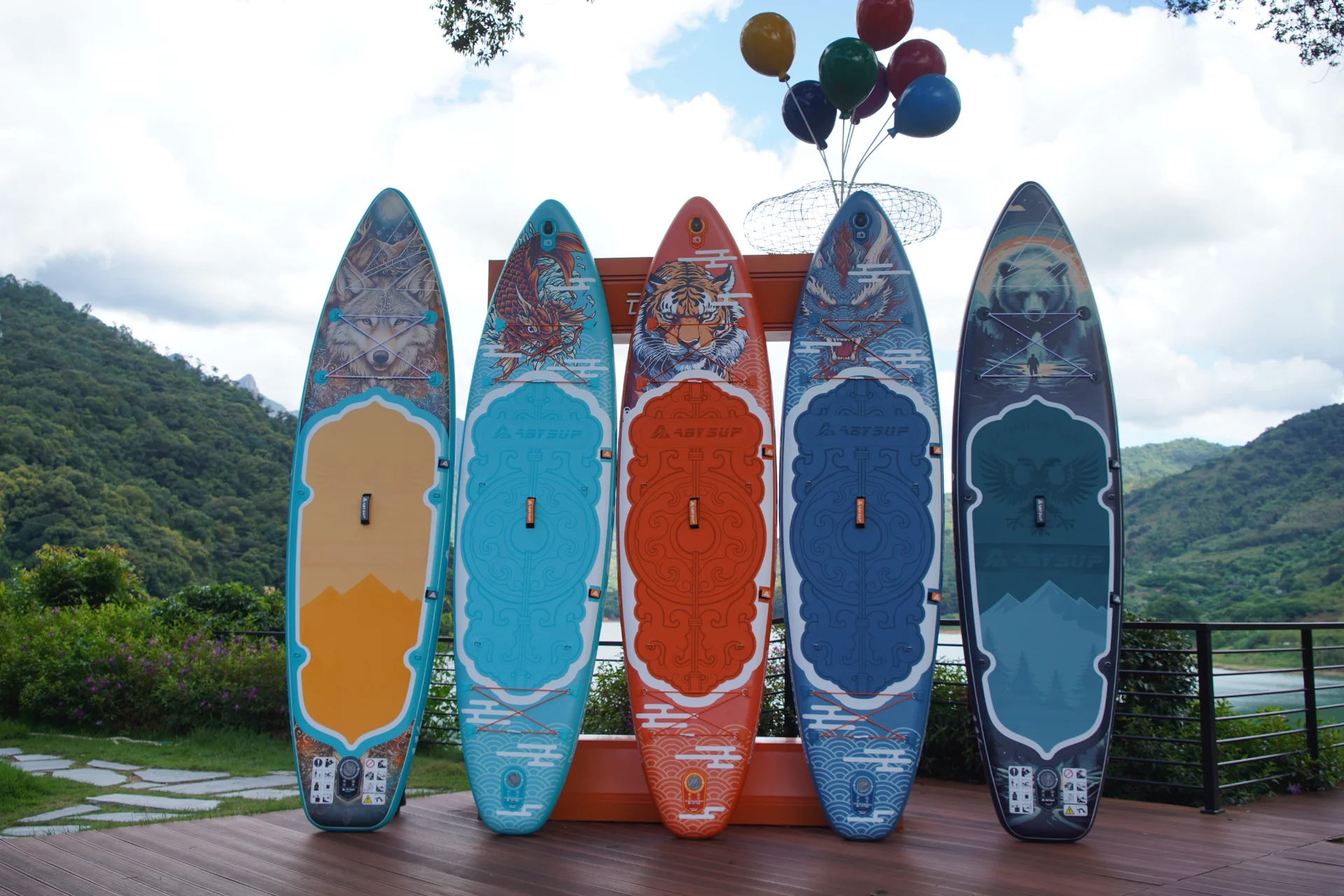
This is why we at ABYSUP separate categories instead of creating one oversized board for everyone.
A compact Lightweight board solves portability.
An All-Round board solves everyday versatility.
An XL Stability board solves situations where platform and load become the priority.
The right board is not the one with the highest number. It is the one designed around the way the load is used.
Can Two Adults Stand on a Normal Inflatable SUP?
Sometimes, but I would be careful with the word “normal.”
A typical recreational SUP may handle occasional shared use, especially if the combined rider size is reasonable and the water conditions are calm.
However, standing with two adults creates a very different experience compared with one paddler.
Things become more challenging when:
- both riders are standing;
- both riders are moving at the same time;
- the board is shorter or narrower;
- the riders have very different weights;
- wind or waves increase.
In those situations, stability comes from having enough platform underneath both riders.
I would rather see someone choose a properly sized high-capacity board than force a smaller board to do a job it was not designed for.
What Size Paddle Board Is Better for Two People?
There is no universal “two-person size,” but larger platforms generally create a better experience.
When I evaluate a board for shared use, I pay attention to:
- Length: gives riders more front-to-back space.
- Width: gives more side-to-side stability.
- Thickness: contributes to overall volume.
- Outline: determines how the board distributes load.
For example, our XL Stability category uses a larger platform approach because the goal is not only supporting weight, but creating a comfortable riding area.
That same principle applies to families, fishing users and paddlers carrying additional equipment.
A larger board is not automatically easier to paddle. But when the board needs to support more people or more gear, additional platform often becomes more valuable.

Two People on a SUP vs Tandem Kayak: Different Design Problems
Some buyers compare a two-person SUP with a tandem kayak, but the design challenge is different.
A kayak surrounds the riders with a fixed cockpit position. A paddle board gives riders much more freedom of movement, but that also means balance depends more on the board platform and rider coordination.
On a SUP:
- both riders influence the board’s trim;
- foot position changes the balance;
- wind affects the exposed surface area;
- paddling rhythm matters more.
This is why a wide inflatable SUP can be excellent for relaxed shared adventures, but it still requires communication between riders.
The board provides the platform. The paddlers still create the experience.
Who Should Choose a High Weight Capacity Paddle Board?
A high-capacity SUP is not only for people who weigh more.
It is also for situations where the board needs to carry more responsibility.
I would consider a high-capacity platform if you:
- regularly paddle with another person;
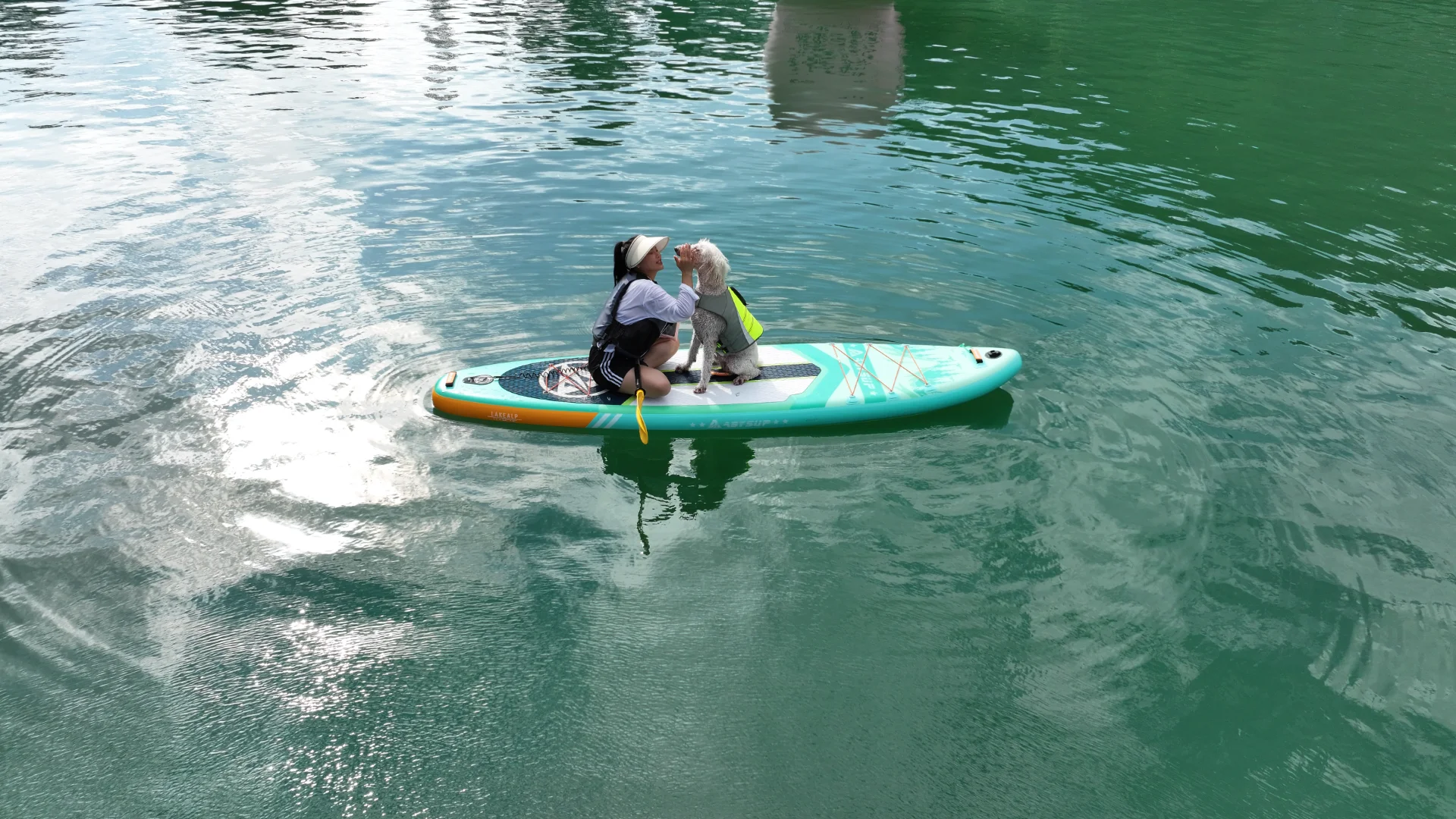
- bring a dog, child or passenger;
- carry fishing equipment;
- need more deck space;
- want a more stable recreational platform;
- prefer confidence over a sportier board feel.
However, I would not recommend choosing the biggest board available simply because it sounds safer.
A large platform also means more board to transport, inflate and control.
The goal is not maximum size.
The goal is the right amount of board for your real use.

Can Two People Ride One Paddle Board FAQs
Can two adults ride one paddle board?
Yes, but only when the board size, stability and combined load are suitable.
A larger inflatable SUP designed for stability and capacity will usually provide a better experience than a smaller recreational board being used beyond its intended purpose.
What size paddle board do two people need?
There is no single size that works for every pair.
Look at combined rider weight, board width, length, deck space and intended activity. Two people relaxing on calm water require something different from two adults trying to paddle distance.
Can two people stand on a 10’6 paddle board?
It depends on the riders, the specific board design and the conditions.
A 10’6 board may work for occasional shared use, but two standing adults create more demand for stability and deck space than one paddler.
Are high weight capacity paddle boards better for families?
They can be a better choice when the board needs to carry changing combinations of riders, children, pets or equipment.
The advantage is not only weight capacity. It is having a larger, more comfortable platform.
Is a wider paddle board better for two people?
Usually, additional width helps create more usable space and stability margin.
But width works together with length, shape and stiffness. The complete design matters more than one measurement alone.
Choose a Paddle Board Based on the Load You Actually Carry
A second rider changes more than the number on the scale. It changes how much platform the board needs to provide.
If your paddling involves another person, extra gear or stability-focused activities, explore the ABYSUP XL Stability Series.
If you are comparing different board categories, use our Compare Paddle Boards guide to understand how Lightweight, All-Round, Lifestyle and XL designs differ.
For dealer and wholesale partners, our team can provide current ABYSUP series specifications and category information.