Introduction
Finding wholesale stand up paddle boards is easy. Finding a brand that fits your customers, protects your investment, and supports your store after the sale takes more work.
For stand up paddle board distributors, retailers, and commercial buyers, the real questions go beyond unit price. Which boards should you stock? What happens when a customer needs a replacement fin? How do you become an authorized dealer without committing to inventory you cannot sell?
Many new SUP buyers ask the same question: how to compare inflatable SUP products, assess brand partnerships, calculate purchasing costs, and identify reliable supply channels before placing an order.
What Should You Look for in a Wholesale SUP Brand?
A reliable SUP brand should make your job easier. You should be able to understand the products, explain them to customers, and get support when problems happen. The cheapest supplier is not always the best choice. A low price means little if the product creates more customer complaints later.
• Choose Boards That Match Your Customers
Compare the brand’s board categories with your actual customers. A watersports shop serving first-time paddlers may need stable all-round models, while a specialist retailer may also need touring boards for experienced customers.
• Ask About Support Before Ordering
Check whether the supplier provides product photography, replacement parts, warranty instructions, and staff training. These resources help stand up paddle board retailers answer questions accurately and resolve problems without unnecessary delays.
When comparing stand up paddle board companies, request written information rather than relying on promotional claims. A good supplier relationship should remain useful after the initial shipment.
All-Round vs. Touring: Which SUP Boards Should Retailers Stock?
Most SUP stores do not need dozens of models at the beginning. A better approach is to choose boards that match different customer groups: versatile recreational paddling and efficient longer-distance paddling. All-round and touring boards serve these purposes differently.
| Buying Factor | All-Round SUP | Touring SUP |
|---|---|---|
| Typical Customer | Beginners and recreational paddlers | Fitness and distance paddlers |
| Main Priority | Stability and versatility | Tracking and glide efficiency |
| Board Shape | Generally wider with a more rounded outline | Generally longer with a more streamlined shape |
| Retail Positioning | Accessible recreational category for a wider audience | More specialized category for experienced paddlers |
| Key Specifications | Width, volume, stability, and deck space | Length, rigidity, tracking ability, and fin setup |
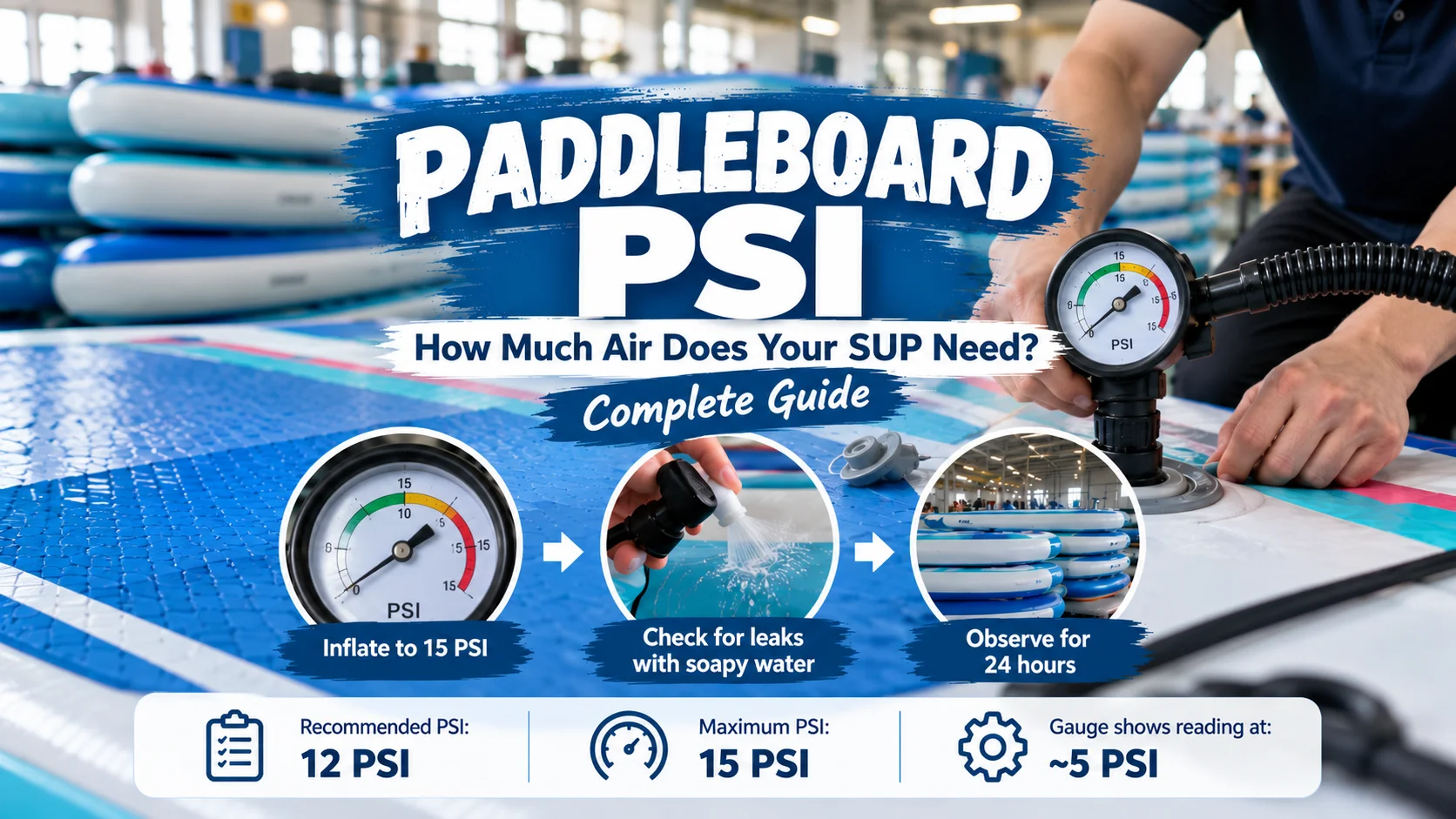
ABYSUP’s published 10’6″ All-Round specifications include a 32-inch width, 295-liter volume, and 15 PSI recommended inflation pressure. These are manufacturer-stated specifications for the featured configuration, not universal standards for all boards.
Retail buyers can review the ABYSUP All-Round inflatable SUP range when comparing recreational models.
Is There Enough Demand for Inflatable SUP Retail?
Outdoor participation data can help retailers understand the wider market environment, but it should not be used as a direct forecast of paddle board sales.
The Outdoor Industry Association’s 2025 Outdoor Participation Trends Report showed that outdoor participation continued to grow across different age groups. The report recorded a 7.4% increase among seniors and a 5.6% increase among youth participants. It also reported approximately five million more frequent outdoor participants compared with previous years.
These numbers represent overall outdoor recreation trends, not inflatable SUP sales specifically. However, they show that more people are participating in outdoor activities, creating opportunities for brands and retailers that understand their target customers.
Outdoor Participation Growth by Age Group
Seniors: +7.4%
Youth: +5.6%
Source: Outdoor Industry Association, 2025 Outdoor Participation Trends Report . Bar lengths use a 10% reference scale. Data represents overall outdoor participation trends, not SUP-specific sales data.
What Does This Mean for SUP Retailers?
For retailers, these trends highlight the importance of understanding different customer groups. A beginner looking for a first inflatable SUP board has different needs from an experienced paddler looking for a touring model.
Market growth alone does not guarantee product sales. Retailers should also consider local demand, seasonal buying patterns, competitor products, storage capacity, and customer feedback before deciding how much inventory to purchase.
A well-planned SUP product range should balance popular entry-level boards with specialized models that attract experienced paddlers.
How Do You Become an Authorized Inflatable SUP Dealer?
Becoming an authorized SUP dealer is more than simply buying products in bulk. A brand usually wants to understand your business, sales channels, target customers, and how you plan to represent the products.
The process is different from placing a one-time wholesale order. A dealer partnership is usually built around long-term cooperation, customer support, and brand growth.
• Step 1: Introduce Your Business
Start by sharing basic information about your company. This may include your business type, sales channels, target market, operating country, and previous experience selling outdoor or watersports products.
Whether you operate a physical store, an e-commerce website, or a regional distribution business, explaining your customer base helps the brand understand if there is a good market fit.
• Step 2: Understand the Partnership Terms
Before placing your first order, ask about important dealer details such as product pricing, opening order requirements, payment terms, warranty support, replacement parts, and available marketing materials.
If you are interested in territory protection or exclusivity, ask the brand about the requirements and conditions. Do not assume exclusivity is included unless it is clearly confirmed.
• Step 3: Build Your First Product Plan
A successful SUP dealership usually starts with the right product mix. Choose models based on your customers instead of ordering too many different boards at once.
For example, beginner-friendly all-round boards may work well for family and recreational customers, while touring SUP boards may attract experienced paddlers looking for longer-distance use.
• Step 4: Prepare for Customer Support
Selling SUP boards does not end after delivery. Dealers should understand how product questions, warranty requests, and replacement parts are handled before customers start using the boards.
Clear communication between the brand and dealer helps create a better customer experience and reduces problems after purchase.
ABYSUP provides partnership options for businesses interested in becoming authorized retailers and distributors. The dealer process includes reviewing business information, discussing partnership opportunities, and confirming suitable cooperation terms.
Businesses interested in learning more can visit the ABYSUP authorized dealer program .
What Do New SUP Dealers Worry About Most?
Starting a SUP dealership can be exciting, but many new dealers have the same concerns: Will the boards sell quickly enough? And what happens if customers need help after purchase?
Having a good product is important, but choosing the right supplier is just as important. Dealers need a brand that provides clear product information, replacement parts, and reliable support when problems happen.
“My biggest concern is not placing the first order. It is what happens if the boards do not sell as quickly as expected. I do not want too much money sitting in inventory.”
This is an illustrative buyer scenario, not a verified customer testimonial. It reflects a common concern among new SUP dealers: managing inventory risk and making sure the first order matches real customer demand.
“My other concern is customer support. If a customer has a problem with the pump, valve, or fin, I need to know that the brand will help me solve the problem quickly.”
This second buyer scenario highlights another important issue for retailers. After-sales support can directly affect customer satisfaction and the reputation of the dealer.
• Check Warranty and Support Before Ordering
Before placing a wholesale order, ask the supplier how customer issues are handled. Important questions include:
- How are warranty claims submitted?
- What information or photos are needed for a claim?
- Are replacement parts available?
- Who handles shipping costs for replacements?
- How quickly can dealers receive support?
Clear answers are more valuable than general promises. A strong supplier relationship helps dealers solve problems faster and create a better experience for their customers.
How Should You Compare Wholesale SUP Costs?
When purchasing wholesale inflatable paddle boards, the final cost includes more than the board price. Shipping, import fees, accessories, and after-sales support can all affect your total investment.
When comparing wholesale SUP suppliers, make sure each quotation includes similar products and commercial terms. A lower unit price does not always mean a better deal if additional costs appear later.
| Cost Component | What to Check | Why It Matters |
|---|---|---|
| Board Price | Model, quantity, and currency | Determines the basic product cost |
| Accessories | Paddle, pump, fin, backpack, and leash | Affects the overall retail package value |
| Freight and Import | Shipping terms, duties, and additional fees | Changes the final landed cost |
| After-Sales Costs | Returns, replacement parts, and warranty support | Affects long-term profitability and customer satisfaction |
Landed cost per unit = (Product cost + freight + duties + applicable handling fees) ÷ number of units received.
Retailers can also estimate gross margin by using this formula: (Net selling price – cost of goods sold) ÷ net selling price. These calculations help businesses understand potential profitability, but actual results depend on market conditions, pricing strategy, and operating costs.
For wholesale paddle boards, the first order should also consider storage space, seasonal demand, and the risk of unsold inventory. Ordering the right product mix is often more important than simply purchasing a larger quantity.
Where Can You Find Reliable SUP Suppliers Near You?
Finding reliable stand up paddle board suppliers near you requires more than choosing the closest company. Start with official brand dealer networks, established watersports distributors, and suppliers with experience serving commercial buyers.
A nearby supplier can make communication and delivery easier, but location alone does not guarantee product quality, stable supply, or suitable business terms.
• Do Not Judge a Supplier Only by Location
Searches such as “stand up paddle board distributors near me” may show different types of businesses, including retail stores, rental operators, local dealers, and wholesale suppliers.
Before requesting a quotation, confirm whether the company actually supplies products for retailers, distributors, or commercial buyers.
| Supplier Check | What to Confirm | Why It Matters |
|---|---|---|
| Business Type | Brand owner, distributor, retailer, or manufacturer | Helps identify whether they can support wholesale purchasing |
| Product Information | Catalog, specifications, accessories, and product documents | Allows accurate product comparison |
| Commercial Terms | Pricing, shipping terms, payment conditions, and warranty process | Reduces unexpected costs after ordering |
| Market Support | Dealer support, marketing materials, and customer service | Helps retailers build long-term sales |
• Check Supplier Experience in Your Target Market
For buyers in the United States, Italy, Spain, and other European markets, it is important to confirm delivery coverage, product documentation, import responsibilities, and warranty arrangements before placing an order.
If a company describes itself as one of the stand up paddle board makers , check whether it sells its own consumer brand or mainly produces products for other businesses.
• Choose Evidence Over Distance
A reliable sourcing decision should be based on real information, not only geographic convenience. Ask suppliers for a product catalog, available certifications or documents, business references where available, and written commercial terms.
For retailers looking for a long-term SUP brand partnership, you can review the ABYSUP authorized dealer program to understand the partnership process.
Why Should Safety and Product Documentation Matter to Dealers?
SUP retailers need accurate product instructions and safety information because customers may use their boards in different water conditions, weather environments, and experience levels.
Safety information is not only important for customers. For dealers, clear documentation can reduce product misunderstandings, improve customer confidence, and create a better buying experience.
According to the U.S. Coast Guard’s 2024 Recreational Boating Statistics, 76% of fatal boating incident victims drowned where the cause of death was known. Among victims where personal flotation device use was known, 87% were not wearing one.
These statistics cover recreational boating overall, not inflatable SUP defects or SUP-only incidents. However, they highlight why water safety education remains an important part of responsible product sales.
Source: U.S. Coast Guard, 2024 Recreational Boating Statistics .
• Safety Information Dealers Should Provide
| Safety Information | What Customers Need to Know | Why It Matters for Dealers |
|---|---|---|
| Inflation Instructions | Recommended PSI range and correct inflation steps | Helps prevent incorrect use and product complaints |
| Safety Equipment | Local requirements for personal flotation devices and other equipment | Supports responsible product guidance |
| Product Instructions | Setup, storage, maintenance, and basic care | Improves customer satisfaction after purchase |
| After-Sales Support | Warranty process and replacement part information | Makes dealer support easier and faster |
Retailers should ensure customers receive the manufacturer’s instructions, understand inflation limits, and know the applicable local rules for flotation devices and leash use.
Providing accurate safety guidance does not only protect customers. It also helps dealers build trust and reduce preventable misunderstandings after the sale.
For businesses evaluating SUP products for retail, reviewing product specifications and support information before ordering is an important step. You can learn more about ABYSUP product options through the ABYSUP All-Round inflatable SUP boards .
Frequently Asked Questions About Wholesale SUP Boards
• Can a Small Retail Store Become an Authorized SUP Dealer?
Yes, some brands accept smaller specialty retailers, although eligibility and opening order requirements vary. Prepare your business details, target market, and expected product assortment before applying.
• Is Buying From a Distributor Better Than Buying From a Manufacturer?
It depends on your business model. A distributor may provide established branded products and local support. Direct manufacturing relationships can offer different purchasing arrangements but may require more involvement in product development, quality checks, and logistics.
• What Is the Minimum Order for Wholesale Stand Up Paddle Boards?
There is no universal minimum order. Requirements vary by brand, model, region, and partnership tier. Request the current terms in writing before calculating your opening inventory budget.
• What information should I ask a SUP supplier before ordering?
Ask for model specifications, accessory lists, product instructions, warranty conditions, commercial quotations, and applicable product documentation. Confirm which documents are required in your sales market.
• How Can I Reduce Risk on My First Bulk SUP Order?
Start with a limited assortment matched to your customers, verify total purchasing costs, and agree on after-sales procedures before committing to larger quantities.
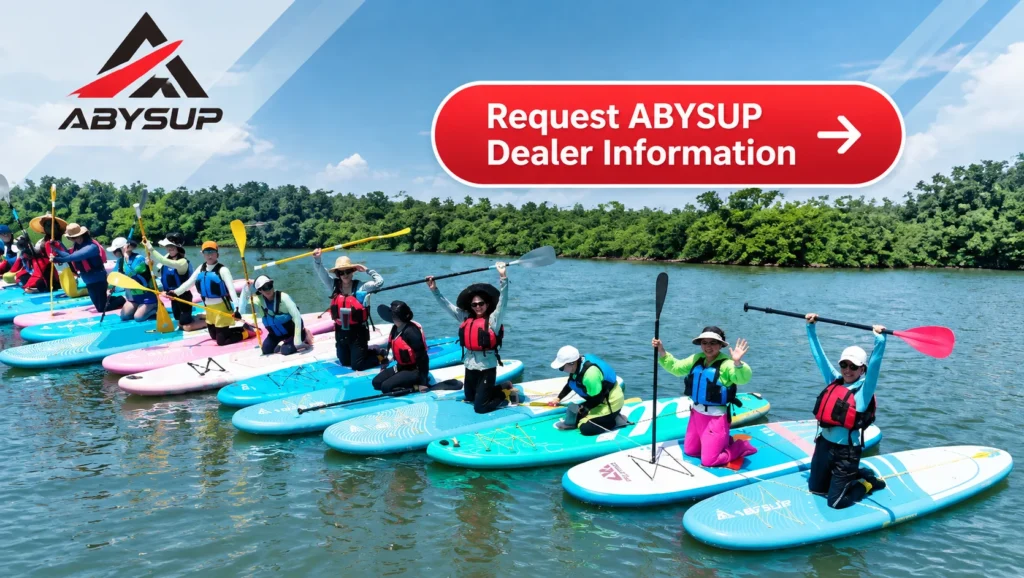
Choose a SUP Brand That Supports Your Business
Successful wholesale stand up paddle board purchasing starts with three decisions: selecting boards your customers will use, understanding the complete cost of stocking them, and choosing a brand that can support your business after delivery.
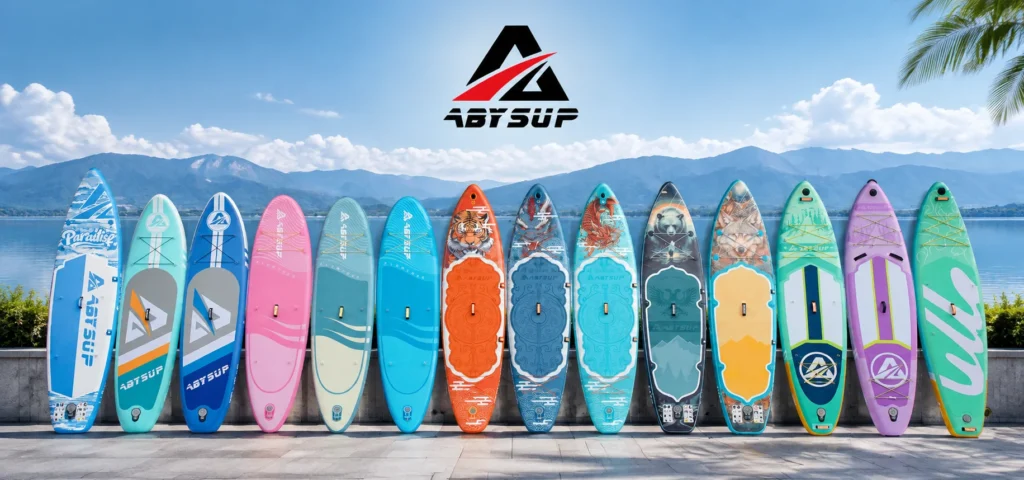
ABYSUP focuses on branded inflatable SUP products, including All-Round and Touring categories for different paddling needs. Retailers and distributors considering a partnership should compare product specifications, confirm current commercial terms, and discuss their intended market with the ABYSUP team.
Next step: Prepare your target market, preferred board categories, and estimated order requirements before requesting a dealer discussion or product quotation.